It can be, if you run the numbers yourself and buy a villa with a clear lease and a clear operator. It isn’t, if you’re counting on the yield in the listing.
In our average scenario the villa takes 30.8 years to earn back its price, and the median villa has 27.1 years of land lease left. That’s before upkeep and repairs.
The villa we ran the numbers on
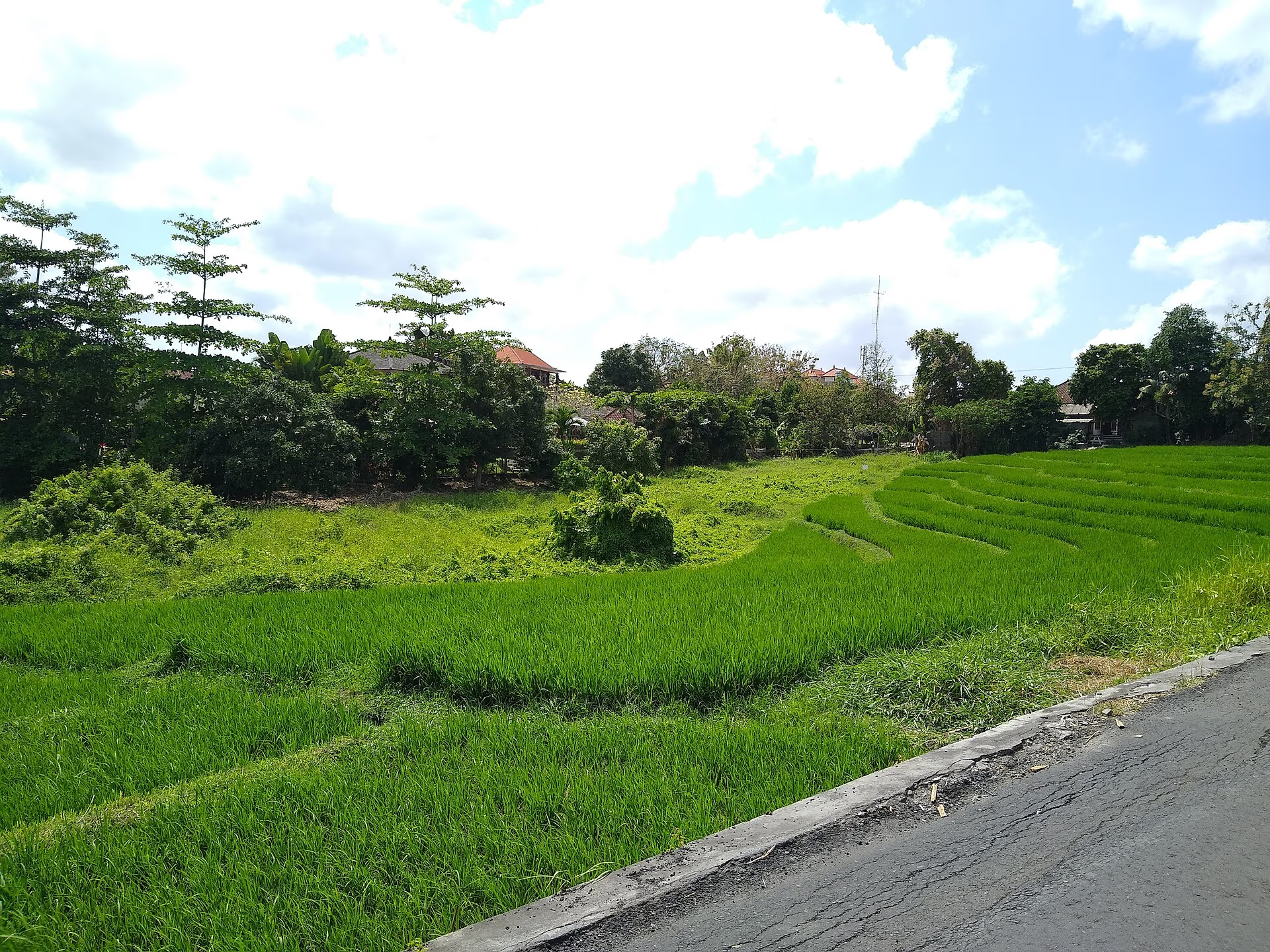
We use the median of our sample: 46 villas for sale in five areas, as of 27 October 2026. The price is $376K, three bedrooms.
These are asking prices, not closed deals. How we built the sample is in Buying a villa in Bali.
36 of the 46 are leasehold, with a median of 27.1 years left on the lease. The ten marked “freehold” use the seller’s word: a foreigner can’t hold Hak Milik, the Indonesian freehold title. More in leasehold in Bali.
There’s no single “median villa district”. Prices are close everywhere, and the lease length makes the difference.
Three scenarios: a good, an average and a bad year
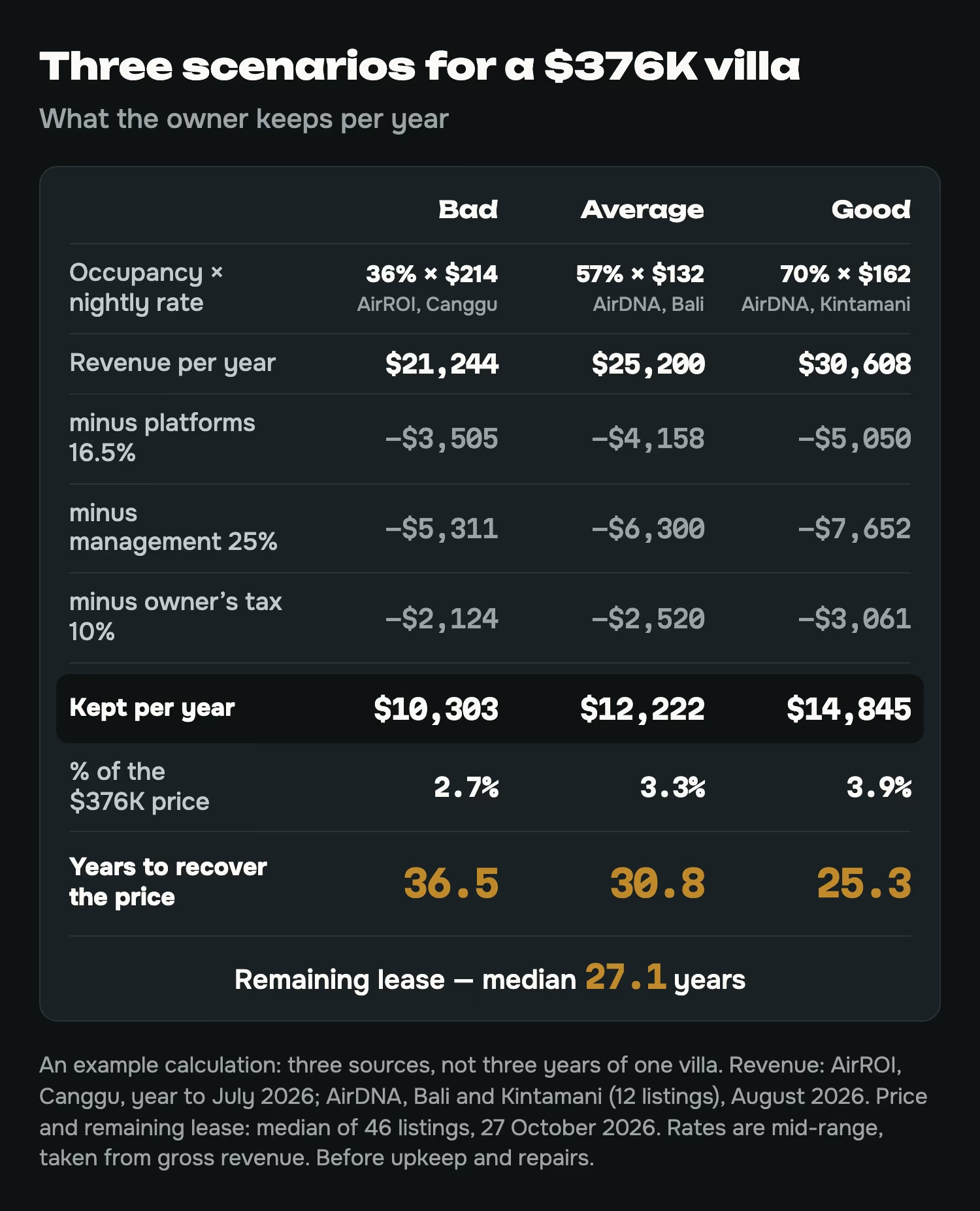
The three scenarios come from three sources, not from three years of one villa. It’s a worked example, not a forecast.
| Bad | Average | Good | |
|---|---|---|---|
| Source | AirROI, Canggu, year to 07.2026 | AirDNA, all of Bali, August 2026 | AirDNA, 12 comparable listings in Kintamani, August 2026 |
| Occupancy × nightly rate | 36% × $214 | 57% × $132 | 70% × $162 |
| Revenue per year | $21,244 | $25,200 | $30,608 |
| Minus booking platforms (16.5%) | −$3,505 | −$4,158 | −$5,050 |
| Minus management company (25%) | −$5,311 | −$6,300 | −$7,652 |
| Minus owner’s tax (10%) | −$2,124 | −$2,520 | −$3,061 |
| Left for the owner | $10,303 | $12,222 | $14,845 |
| Share of the $376K price | 2.7% | 3.3% | 3.9% |
| Years to earn back the price | 36.5 | 30.8 | 25.3 |
| At 20% tax: left for the owner | $8,179 | $9,702 | $11,784 |
| At 20% tax: years | 46.0 | 38.8 | 31.9 |
We use each source’s reported revenue, not “occupancy × rate × 365”. The formula gives 9–35% more than reported revenue, because the average includes listings that only ran part of the year.
The “good” case is the mountains. Those 12 Kintamani listings were picked because they resemble Nord Nest, and three of them have operated for less than a year. It isn’t the area of a median villa.
The “bad” case already comes after a 23% yearly drop in revenue per listing in Canggu.
How many years does a Bali villa take to pay back
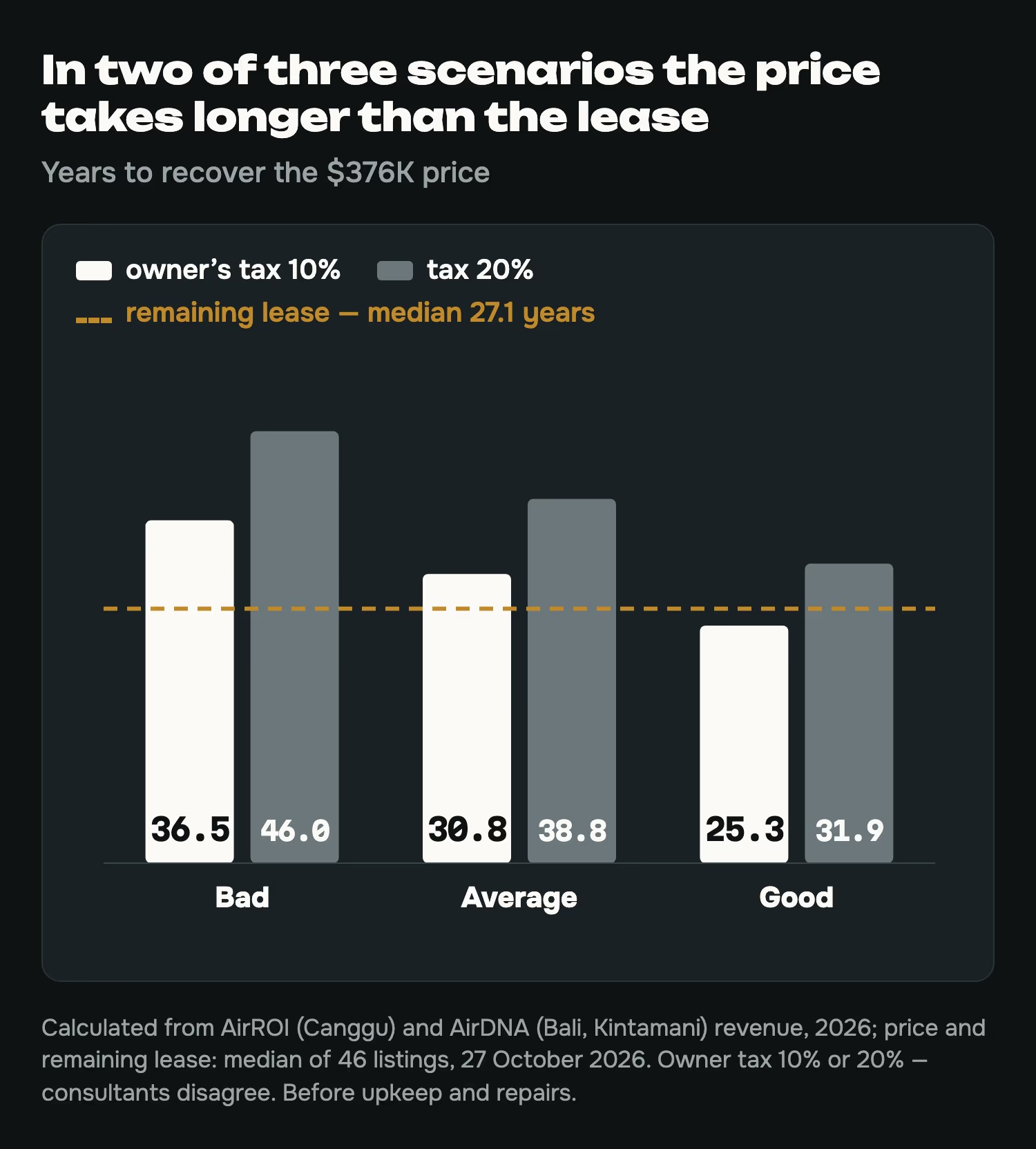
In the average case the price comes back in 30.8 years, with 27.1 years of lease left. In the bad case it’s 36.5. Only the good case gets there: 25.3 years, by the end of the lease and with under two years to spare.
At 20% tax it’s worse: 31.9 to 46.0 years.
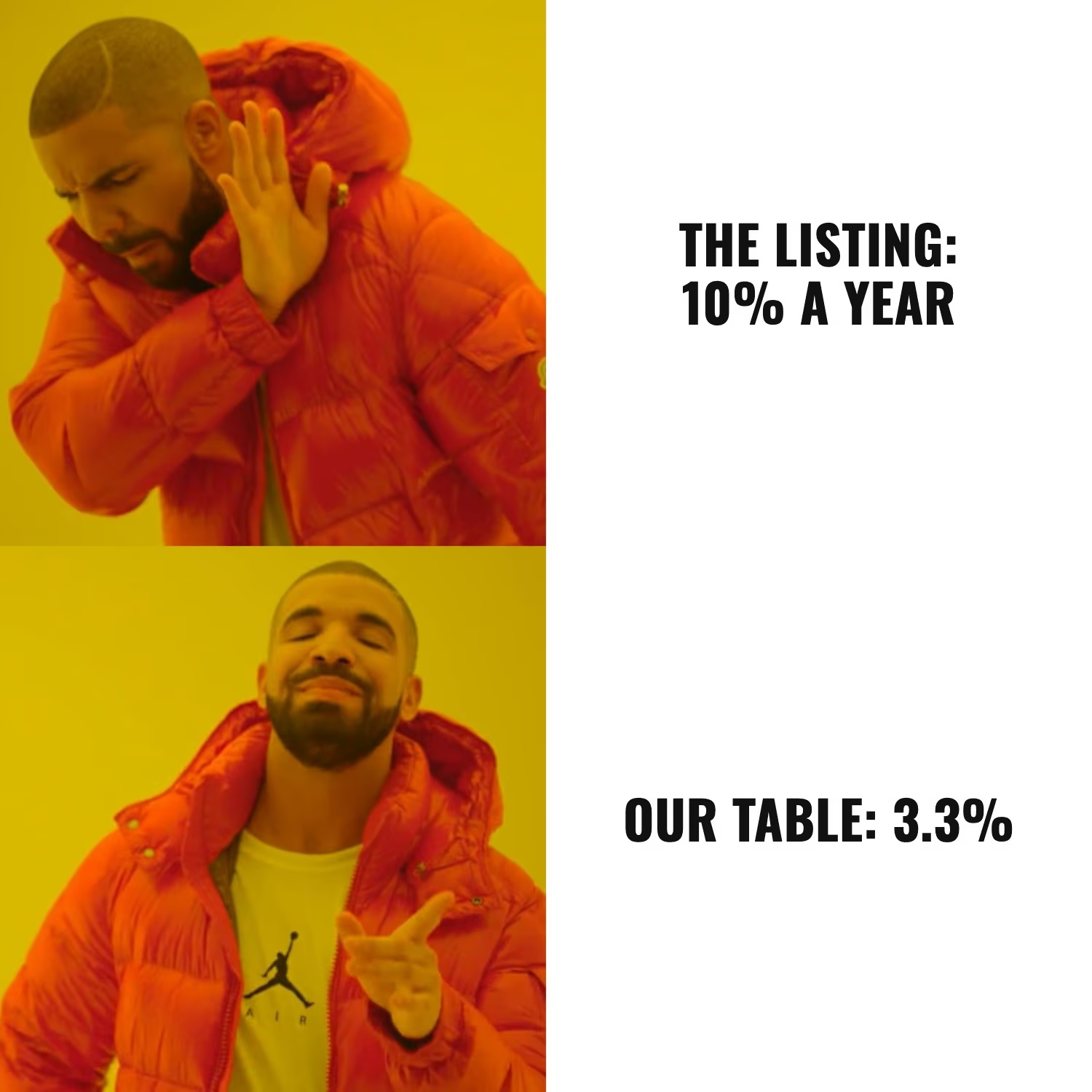
Upkeep (staff, utilities, pool) and repairs come off as well. From operators’ public figures, that’s $6K to $17K a year for a three-bedroom villa (operators’ estimates, 2025–2026). Against $12,222 in the average case, you end up with somewhere between $6K and zero or less. Land and building tax isn’t in the table either.
What’s left of a $100 booking
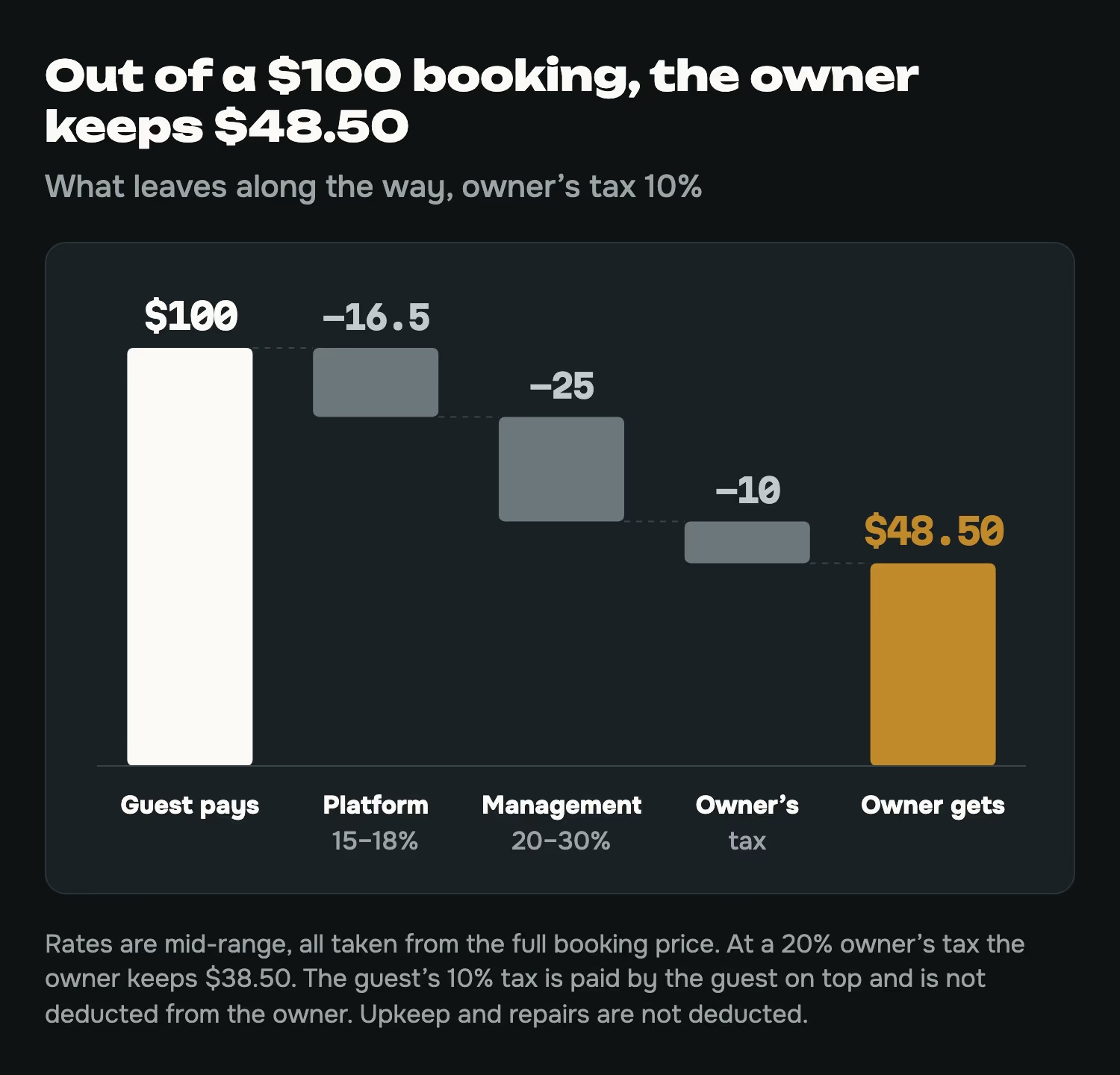
We take the middle of each range and apply every percentage to the full booking price. Platform: $16.50, leaving $83.50. Management company: $25.00, leaving $58.50.
Owner’s tax: $10.00. The owner keeps $48.50, or $38.50 at 20% tax.
Platform fees are often quoted at 15–18%, and Airbnb’s single host fee is 15.5% (Airbnb Help Center). A management company is usually said to take 20–30%, but we found no independent measurement for Bali.
Operators there publish 15–20% themselves. With those softer deductions (15% + 20% + 10%), you keep $55 of every $100.
The average scenario then gives $13,860 a year, or 27.1 years: exactly the lease that’s left. The harsh end (18% + 30% + 20%) gives 46.6 years.
The owner’s tax is 10% or 20%, depending on status and contract. Consultants disagree and the tax office hasn’t clarified, so check with an adviser.
The 20% is the withholding for non-residents under PPh 26 (Art. 26 of the Income Tax Law); the 10% is a final tax under PP 34/2017. Details in property taxes in Bali. Whether a double-tax treaty changes this depends on your country.
Hotel tax (PBJT, up to 10%) is paid by the guest, and the owner collects and remits it. We haven’t deducted it. If it’s already inside the listed price, the average case comes to $11,111 and 33.8 years.
How a booking is split among everyone is in who gets paid before the owner.
Who shouldn’t buy a villa in Bali
Anyone who may need the money in a year. We don’t know how many villas sell, how long they stay listed or how much they drop on resale: the listings show no removal dates. As we read the law, passing a lease on without the landowner’s consent is risky, so get that consent written into the contract up front and check it with a lawyer.
Anyone who believes the “guaranteed yield” in a listing. Ask whose revenue it is and for which year. More in reviews and risks of property investment.
Anyone who counts occupancy times rate. The formula gives 9–35% more than reported revenue for the average listing.
This is arithmetic, not an estimate. The price per year of lease in our sample is about $12.7K.
The owner keeps almost the same in a year in the average case ($12,222). So a year of lease left “costs” roughly what the villa earns in a year.
Who should, and what to check first
It makes sense if you buy for the long term and for yourself too: you stay some of the time, rent out the rest, and treat the return as a bonus. Check:
- the lease length and the extension. The law gives no right to extend, only the contract does. 14 of the 36 listings mention an extension and none gives a price or a formula;
- the revenue of neighbouring villas for 12 months. A report, not a promise;
- who pays for upkeep, and whether it’s inside the management company’s percentage. Some operators include it, some bill it separately;
- your tax status and rate: 10% or 20%;
- the developer: how to check a developer in Bali.
Seasons matter too: low season in Bali. More on villa revenue in how much a villa in Bali earns.
How to invest in Bali property without running it yourself
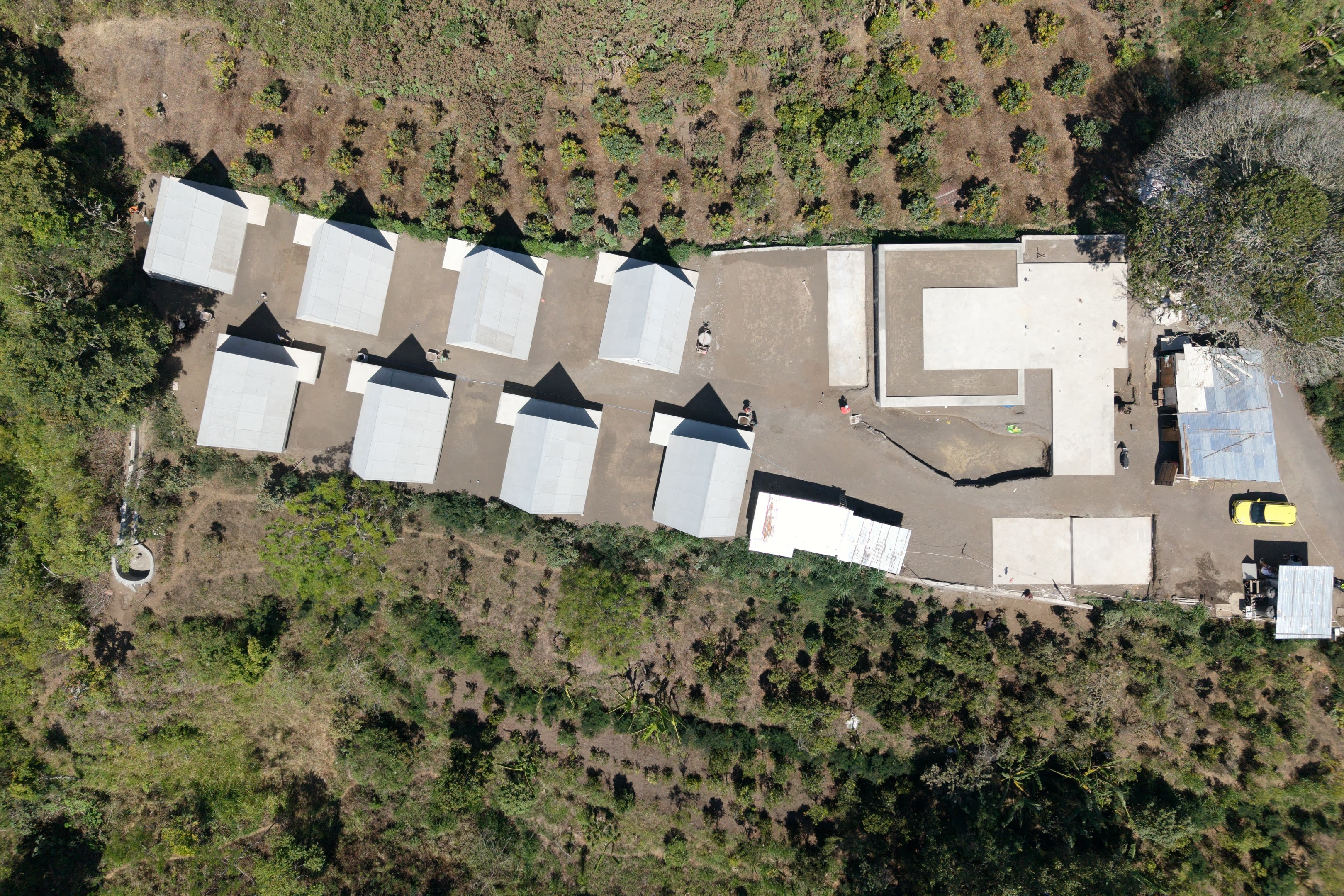
There’s another way to invest in Bali property: a share in the company that owns a whole hotel. That’s how Nord Nest works: $190,000 for a 10% share of the whole hotel, meaning the villas, the spa, the restaurant and the land lease.
The land is leased for 25 years plus a 1-year extension. GRC runs the hotel. Handover is planned for the end of February 2027.
The model gives 18.7% a year and a 5.3-year payback at 80% villa occupancy and a $185 average rate (assumptions as of August 2026). At 50% villa occupancy it’s about 12.5% a year. It’s a model, there are no guarantees.
The 3.3% in the table above isn’t comparable. A share is a different product, and it covers more than villas: a spa, a thermal complex and a restaurant too.
A share gives no title to a specific villa, and there’s a 2-year lock-up. Terms are on the investors page, the project is Nord Nest.
In short
Is Bali real estate a good investment in 2026?
It depends on the villa, the lease and who rents it out. In the average case the price comes back in 30.8 years with 27.1 years of lease left, before upkeep and repairs.
Is a villa in Bali worth it?
By our calculation, in the average case the owner keeps 3.3% of the price a year: $12,222 on a $376K villa.
How long does a Bali villa take to pay back?
25.3 years in the good case, 30.8 in the average and 36.5 in the bad, at 10% tax. At 20%, from 31.9 to 46.0 years.
What is the worst part?
A short lease: the price may not come back before the lease ends. Also the costs a listing leaves out: upkeep, repairs and taxes.
Can I do without a management company?
You can, but then you pay with your own time instead of a percentage. They’re usually said to take 20–30% of revenue, and operators in Bali publish 15–20%.
Next: who gets paid before the owner, on how a booking is split. New calculations go to our Telegram channel, t.me/grc_wwworld.