Leasehold in Bali means renting land (and what stands on it) for a term set by a contract. You do not become the owner of the land: the certificate stays with the landowner. The term, renewal and what happens to the house at the end are set by the contract: the law sets no term, and we found no right to renew in it.
Some points below are our own reading of the law, and we mark them. Data as of October 2026.
What leasehold is under Indonesian law
Under the Basic Agrarian Law (UUPA, UU 5/1960, art. 44) this is Hak Sewa: the right to use land that belongs to someone else for building, in return for rent paid to the owner. Rent can be paid once or in periods.
The Civil Code (KUHPerdata, from art. 1548) adds the general rule: a lease is an agreement where one side lets the other use a thing for a defined time at an agreed price.
The law keeps Hak Pakai, covered below, apart: it is a right “that is not a lease” (UUPA, art. 41).
Who can lease land
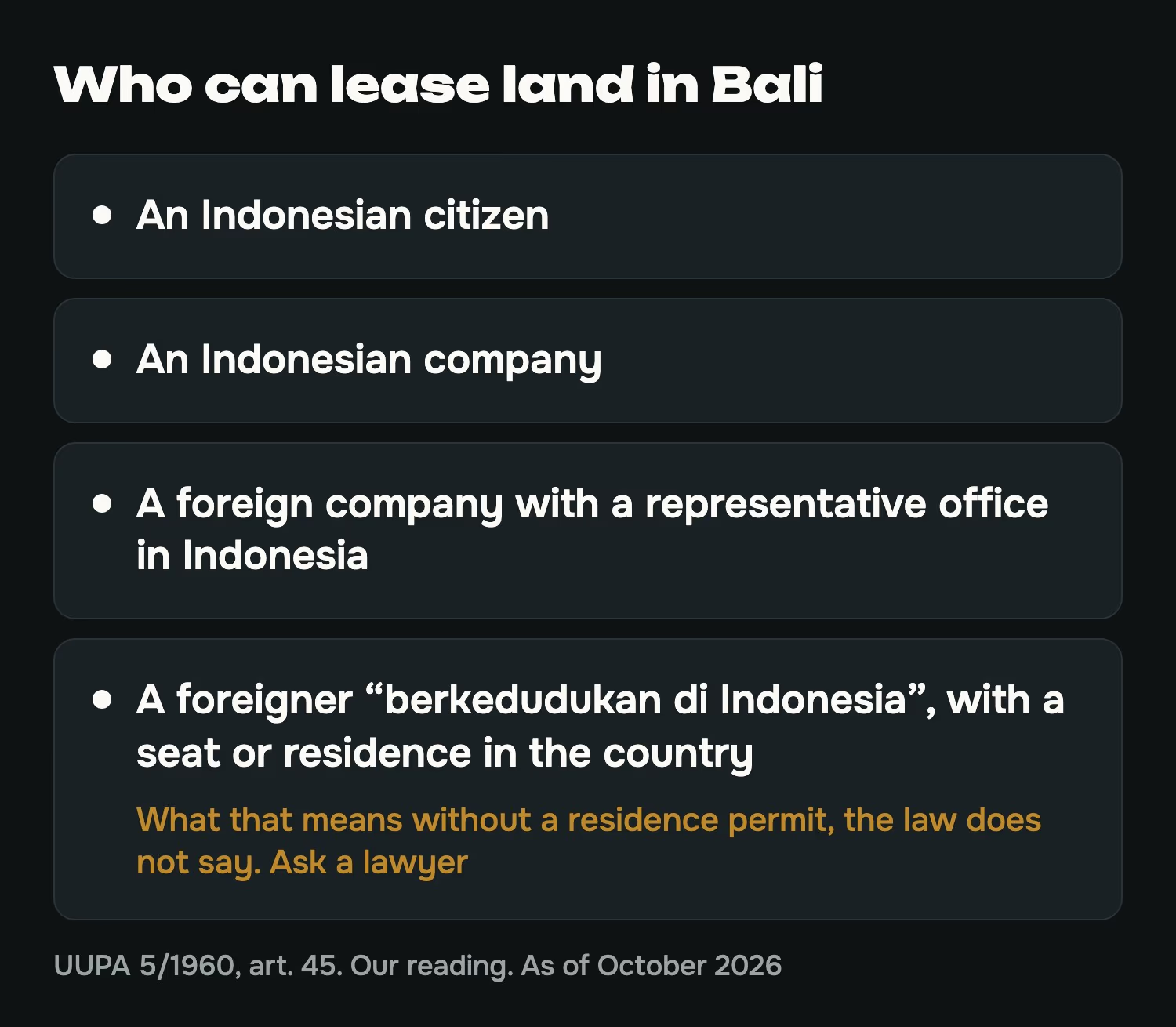
Article 45 of the UUPA lists who can be a tenant: an Indonesian citizen, an Indonesian company, a foreign company with a representative office in Indonesia, and a foreigner “berkedudukan di Indonesia”, meaning one who has a seat or residence in the country.
What that means for someone without a residence permit, the law does not say. We do not know either, so put this question to a lawyer before you sign.
Registration is unclear too. The list of registrable rights (PP 24/1997, art. 9) has no separate line for a lease.
But art. 44 of the same regulation says a lease on Hak Milik land may be registered by a PPAT deed. How that works in Bali in practice, we could not establish.
Judging by these regulations, the tenant does not get a land certificate.
Term: whatever the contract says
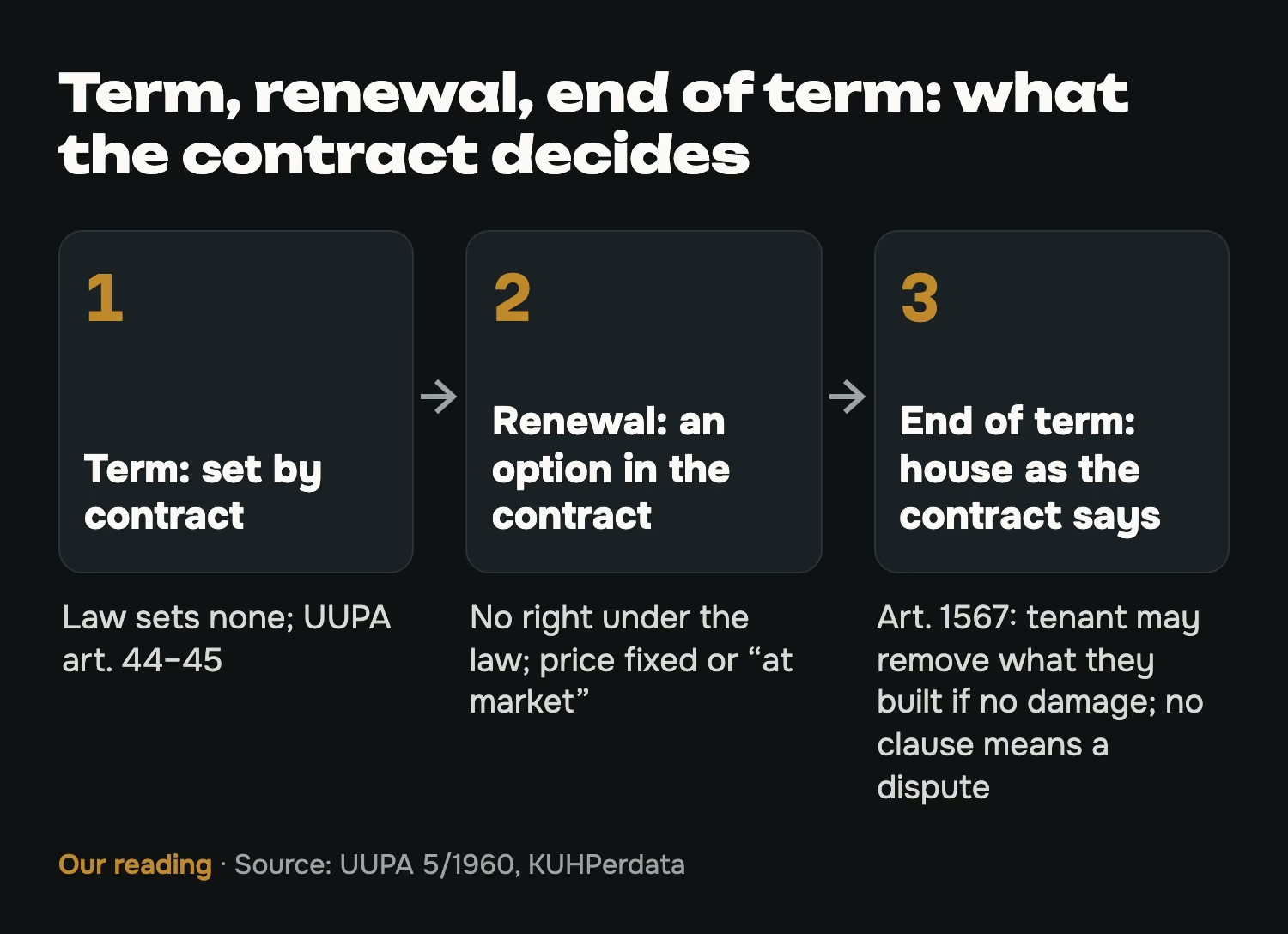
The law sets no term for a lease of private land. There is no upper limit in the UUPA, nor in the KUHPerdata articles we read.
We have no market figures we would trust, either. Agents and developers quote their own terms, and we found no independent survey.
So we do not name a “typical term”. The term is what is written in the contract. That is what you check.
Check the start date too. The remaining time counts from it, not from the day you sign.
Renewal and what happens to the house
We found no right to renew in the law. Renewal is an option you wrote into the contract, or a new deal with the owner.
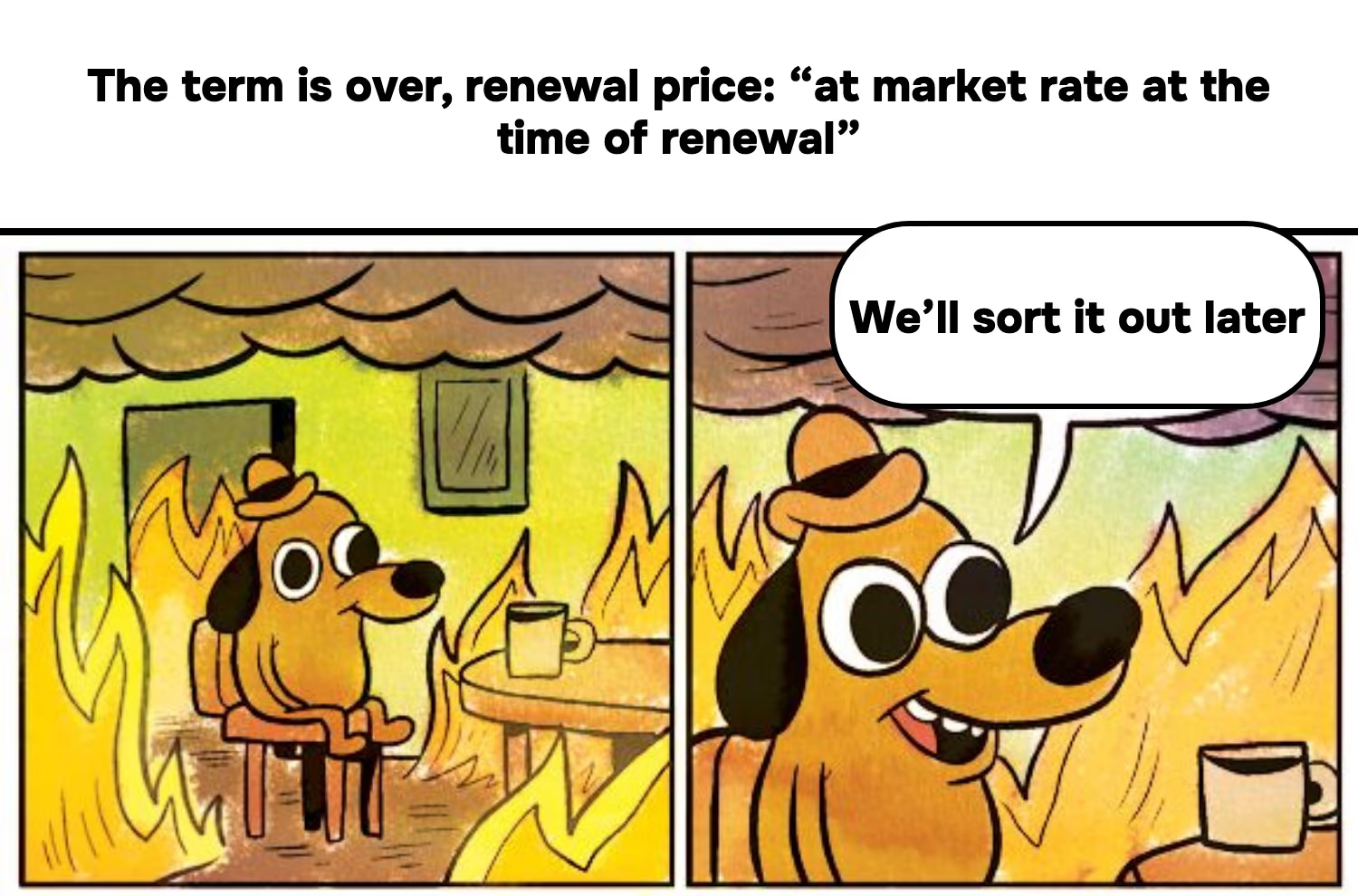
Look at how the renewal price is set. It can be fixed, or “at market rate at the time of renewal”. With the second, you learn the amount when you have nowhere else to go.
If the term ends and you stay on without objection, KUHPerdata (art. 1573) treats it as a new lease on oral terms. Do not rely on it.
The house is harder. In the articles we read, we found no rule that a building passes to the landowner.
There is art. 1567: a tenant may remove what they built at their own cost, if it does not damage the property.
You can’t just take a villa away, so the fate of the house has to be written into the contract. If it is not, there will be a dispute.
If the land is sold, the owner dies, or you want to pass the lease on
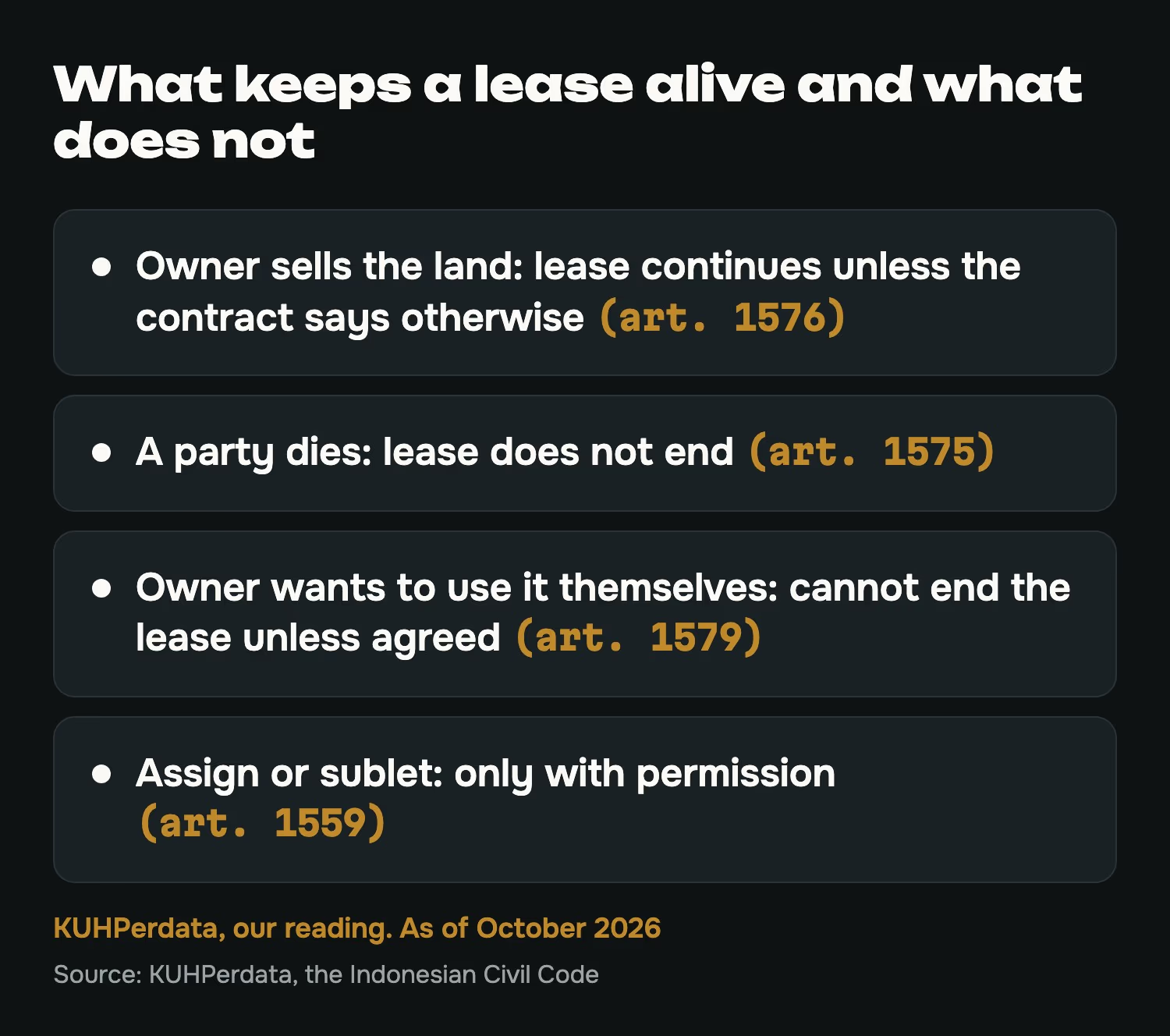
Here the law mostly sides with the tenant.
- The owner sells the land: the lease continues, unless the contract said otherwise when it was signed (art. 1576).
- One of the parties dies: the lease does not end (art. 1575).
- The owner decides to use the land themselves: they cannot end the lease, unless that was agreed (art. 1579).
- You want to hand the lease to someone else or sublet: not without permission, or the lease can be terminated and damages claimed (art. 1559).
The last point matters for resale: selling a leasehold to a new buyer without the landowner’s consent is risky. Get the consent written into the contract up front.
All of this holds while the contract is valid and the land has not been expropriated. A lease does not protect you from everything the owner might do.
Leasehold vs freehold: can foreigners buy property in Bali
Freehold is Hak Milik, ownership of land. It is for Indonesian citizens only (UUPA, art. 21).
So the direct answer to “can foreigners buy land in Bali” is no.
Lawfully, one of two things can stand behind “freehold for a foreigner”: Hak Pakai, or HGB (a right to build) held by an Indonesian company. In our reading, a PT PMA counts as one. If it is neither, it is most likely a nominee arrangement (more on that below).
We covered the company and land rights in detail in how to check a developer in Bali.
| Who can hold it | Term | Main risk | |
|---|---|---|---|
| Leasehold (Hak Sewa) | citizens, companies, a foreigner “berkedudukan” | set by contract | everything rests on the contract |
| Freehold (Hak Milik) | Indonesian citizens only | unlimited | for a foreigner: the deal is void |
| HGB via a PT PMA | an Indonesian company | 30+20+30 on state land | the company, licences |
| Hak Pakai | a foreigner with immigration documents | 30+20+30 on state land | price threshold, status |
Hak Pakai for a foreigner’s home
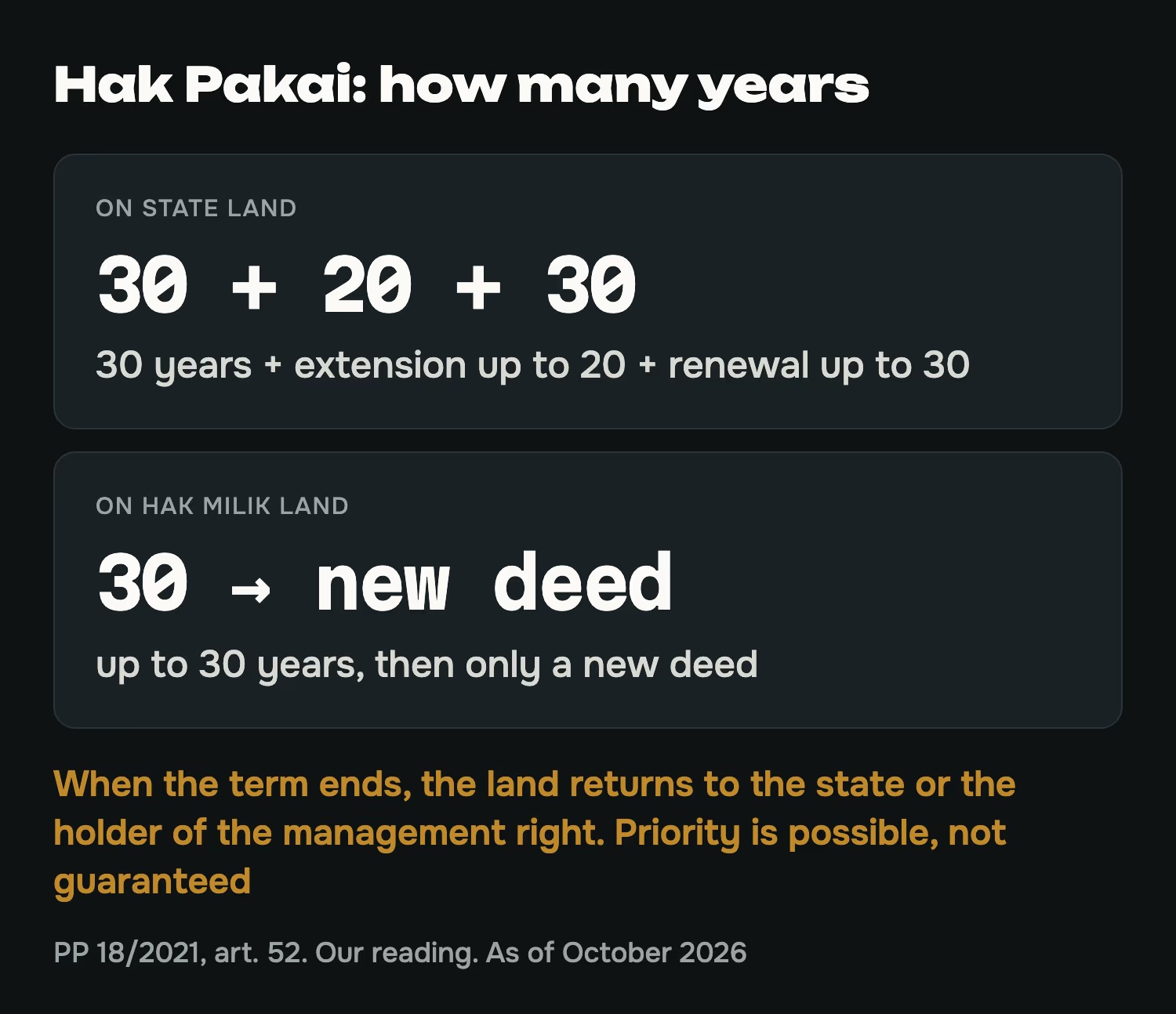
Hak Pakai (right of use) for housing is open to a foreigner with immigration documents: a visa or a residence permit (PP 18/2021, art. 69).
On state land the term is 30 years, extendable by 20 and renewable by 30. On Hak Milik land it is up to 30 years, and there is no 20-year extension, only a new deed (art. 52).
When the term ends, the land goes back to the state or to the holder of the management right. The previous holder may get priority, but not a guarantee.
There are limits on minimum price, plot size and number of properties. The threshold is set by a ministerial order and differs by region. Sources give different amounts, so confirm the figure with a notary on the date of the deal.
Nominees: why leasing from a “friendly” owner is dangerous
A nominee arrangement is when land is registered to a local person and a foreigner uses it. For Hak Milik the law is strict: a transfer to a foreigner, direct or indirect, is void, the land goes to the state and the money is not refunded (UUPA, art. 26(2)). We take registering land in the name of a front Indonesian to be exactly that kind of “indirect” transfer. For company shares, a similar rule is in UU 25/2007, art. 33.
According to the Bali government, a regional law, Perda No. 4/2026, was signed in February 2026. It bans transferring land through nominees and threatens sanctions, including for intermediaries.
A lease from a real Indonesian owner is a lawful route. The danger is when the “owner” in the contract is only a name, and the land is really held by a foreigner. In our reading such a lease is void, so verify the owner before any money moves.
Tax on lease income
Tax on income from renting land and buildings is 10% of the rent (PP 34/2017). It is paid by whoever receives the rent, that is the landowner, not you. If the tenant is an Indonesian company, including a PT PMA, art. 3 of PP 34/2017 suggests it withholds the tax from the payment. Who bears it in practice depends on the contract: write it down.
Taxes on transferring a lease, the land and building tax (PBB) and deal fees are a question for the notary. We found no primary source with figures for leasehold.
What to ask about the lease before you pay
- The term and the start date.
- Whether there is a renewal option, for how long, and how the price is set.
- What happens to the house at the end.
- Whether the lease can be assigned or sold, and whether the owner’s consent is needed.
- Who owns the land and what their certificate says (checked by an independent notary or PPAT).
- Who pays taxes and PBB.
- What happens if the owner sells the land or dies.
- Who handles the deal: you choose the notary, not the seller.
How it works for us
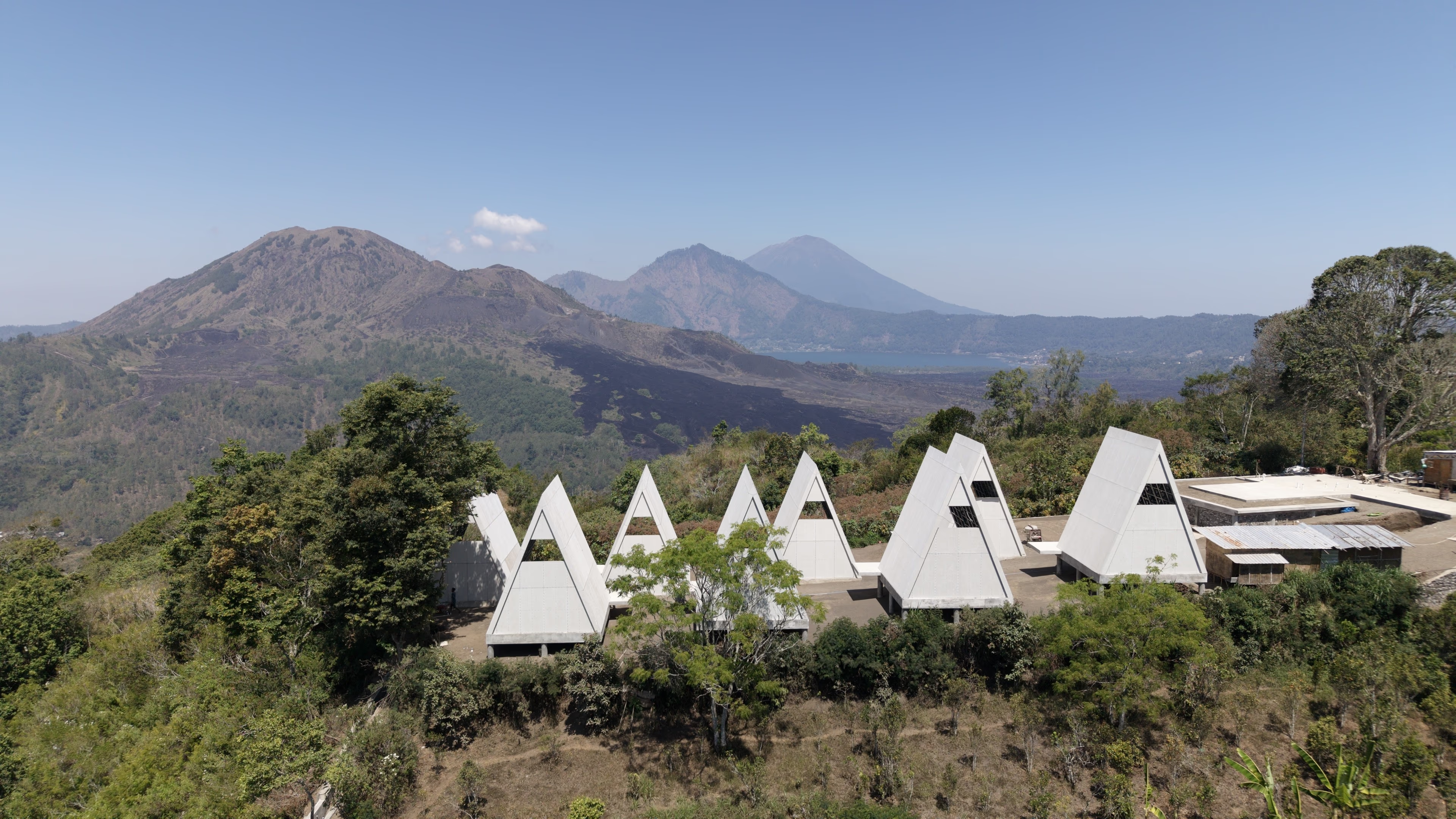
Nord Nest stands on leased land. An investor buys a share in the whole hotel: the villas, the spa, the restaurant and the land lease. More about the project is on the Nord Nest page.
The entry models, where you buy a room and where you buy a share, are compared in buying a hotel room as property.
In short
- Leasehold is a lease of land by contract. The land stays with the owner.
- Term, renewal and the fate of the house are in the contract. The law sets no term.
- We found no right to renew in the law, only an option in the contract. Look at the renewal price.
- A sale of the land or the death of a party keeps the lease alive unless the contract says otherwise; passing it on without consent is not allowed.
- Hak Milik is for Indonesian citizens only; a foreigner has HGB via a company and Hak Pakai.
- Nominees are dangerous: the deal can be void and the money is not refunded.
Frequently asked questions
Can a foreigner buy land in Bali?
Not as freehold: Hak Milik is only for Indonesian citizens. A foreigner can have Hak Pakai (with immigration documents) or a lease, if they are “berkedudukan di Indonesia”; what that means without a residence permit, ask a lawyer. An Indonesian company, including a PT PMA, can hold HGB. This is our reading of the law.
What happens to the villa when the leasehold ends?
The contract decides. In the law we found neither a right to renew nor a rule that the house passes to the landowner. If the fate of the house and the renewal are not written down, expect a dispute.
How is leasehold different from freehold?
Freehold is ownership of the land, and it is not available to a foreigner. Leasehold is the right to use someone else’s land for a term set by contract: the certificate stays with the owner.
Do I need a notary for a lease?
In the code articles we read, notarial form is not required. Still, it is better to sign through an independent notary or PPAT that you chose yourself.