Global Recreation Company
Global Recreation Company
A direct answer to the question everyone asks first.
There's no developer markup built into the entry price. That means there's nothing to earn before the property opens — GRC makes money alongside the investor, from a hotel that's actually running.
GRC keeps at least 30% of the project company, earning from the same operating profit as every other co-owner.
Management stays in-house. The 20-30% of revenue that would normally go to an outside management company stays in the project.
up to 70%
To investors
at least 30%
Stays with GRC
Site selection
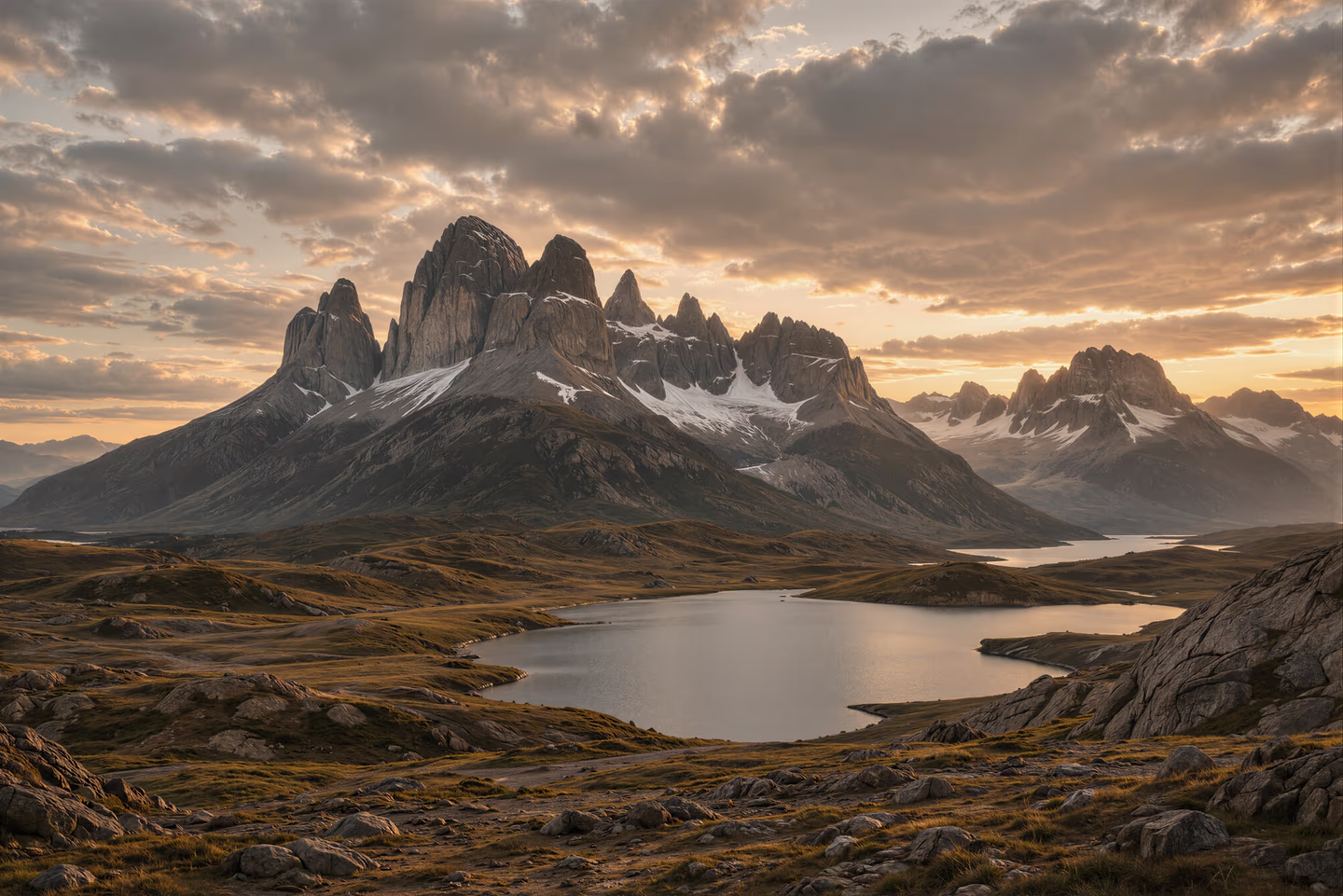
Natural landmark, a view, distance from dense development.
Design and modeling
Master plan follows the terrain; budget and financial model come together.
Project company
investor enters hereA separate legal entity in the country of the property.
Construction
Sixteen months from signing.
Launch and operations
Monthly reporting, profit distribution.
Entry price is construction cost, not the property's market price.
Land, buildings, infrastructure, equipment — proportional to your stake.
Ownership holds regardless of how additional funding gets raised.
Each has its own guest and its own season. 70% of profit is distributed regardless of source.
The main stream. Occupancy and nightly rates are benchmarked against the whole area — the sample isn't cherry-picked.
Its own guest, its own season. Runs its own marketing and draws local traffic.
Runs independent of villa occupancy, keeping revenue up in the low season.
Volcano, ocean, mountains, jungle.
Holds regardless of what gets built nearby.
Away from dense development.
Landscape is run by a separate design studio. Restaurant, spa, and thermal complex get dedicated consulting.
They require a 75% vote among co-owners.
We'll get back to you within a business day.
This site uses cookies for analytics — Yandex Metrica and Google Analytics. Nothing you type into the form is recorded. Learn more
We'll get back to you within a business day.