Currency ate the profit
An investor bought an apartment in dollars. Two years later its lira price had climbed — but in dollars, it had barely moved. Selling fast meant selling at a discount.
Global Recreation Company
A developer makes money when it sells you a villa.
We build ourselves, sell stakes at construction cost, and make money for as long as the hotel runs. Investors get a stake in the company that owns the entire hotel: the land, the villas, the spa, the restaurant.
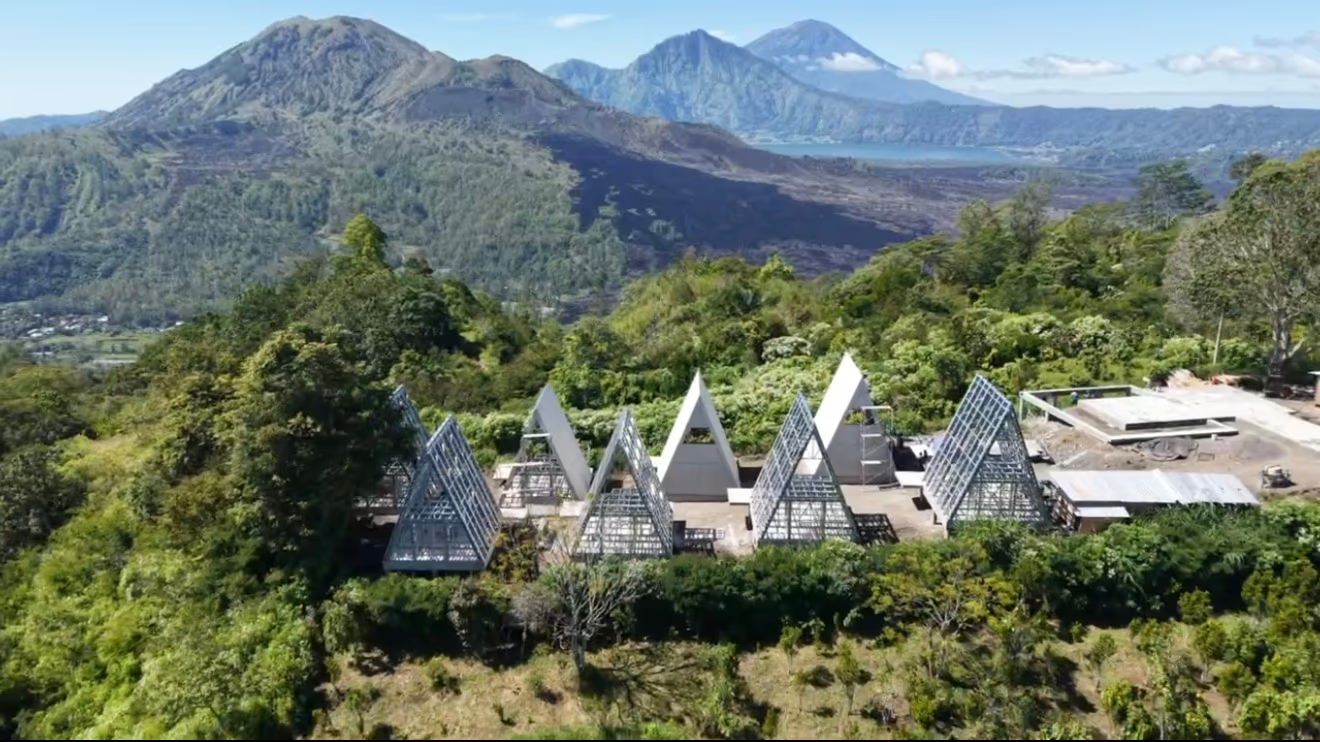 Watch the build live →
Enter at construction cost — no developer markup
Equity in the business, not square meters
Revenue from the whole operation — villas, spa, and restaurant
Boutique scale — up to 15 villas per property
Why does the real outcome miss the projection?
You're not just paying for construction — you're paying for someone else's profit built into it.
You earn from your own villa or apartment, not from the business built around it.
Occupancy, seasonality, fees, upkeep — all of it eats into the number on the brochure.
Location, view, and layout mean some villas in the same building will always out-earn others.
You see the entry price and the projected yield. After you buy, the currency moves, competitors show up, construction slips, and demand shifts.
An investor bought an apartment in dollars. Two years later its lira price had climbed — but in dollars, it had barely moved. Selling fast meant selling at a discount.
An investor bought off-plan to flip after handover. By then, new projects nearby were offering payment plans straight from the developer. Buyers went there instead — this investor had to cut the price to compete.
An investor entered on a guaranteed-return deal. Once the guarantee period ended, so did the payouts. What came after depended on real occupancy and rates, neither of which the investor could influence.
An investor expected income right after handover. Construction dragged on, and by the time it finished, the market was full of similar villas. Prices had to drop to attract tenants.
Real situations investors have brought to us · 2024–2026
We earn from the same operating profit as the co-owners. So what pays off for us is occupancy — not the price you came in at.
Investor
puts in capital
GRC
builds and runs the property
The business
villas + spa + restaurant
Combined revenue
every income stream working together
Investor
earns from the business running
You share in the project's economics, not just its square meters.
Income comes from villas, spa, restaurant, and everything else running on site.
GRC designs, builds, launches, and runs the project.
Chapter one starts in Bali
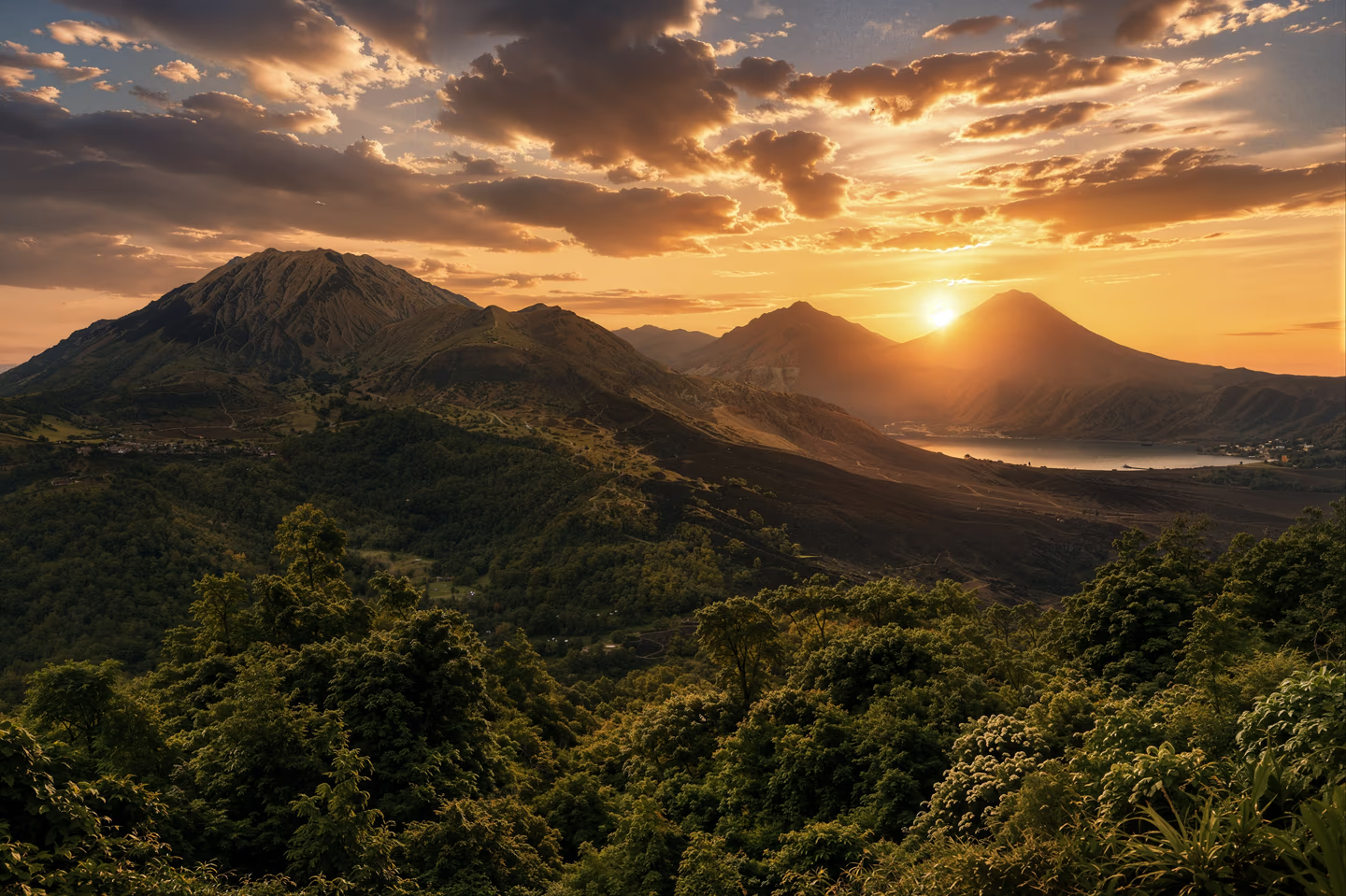
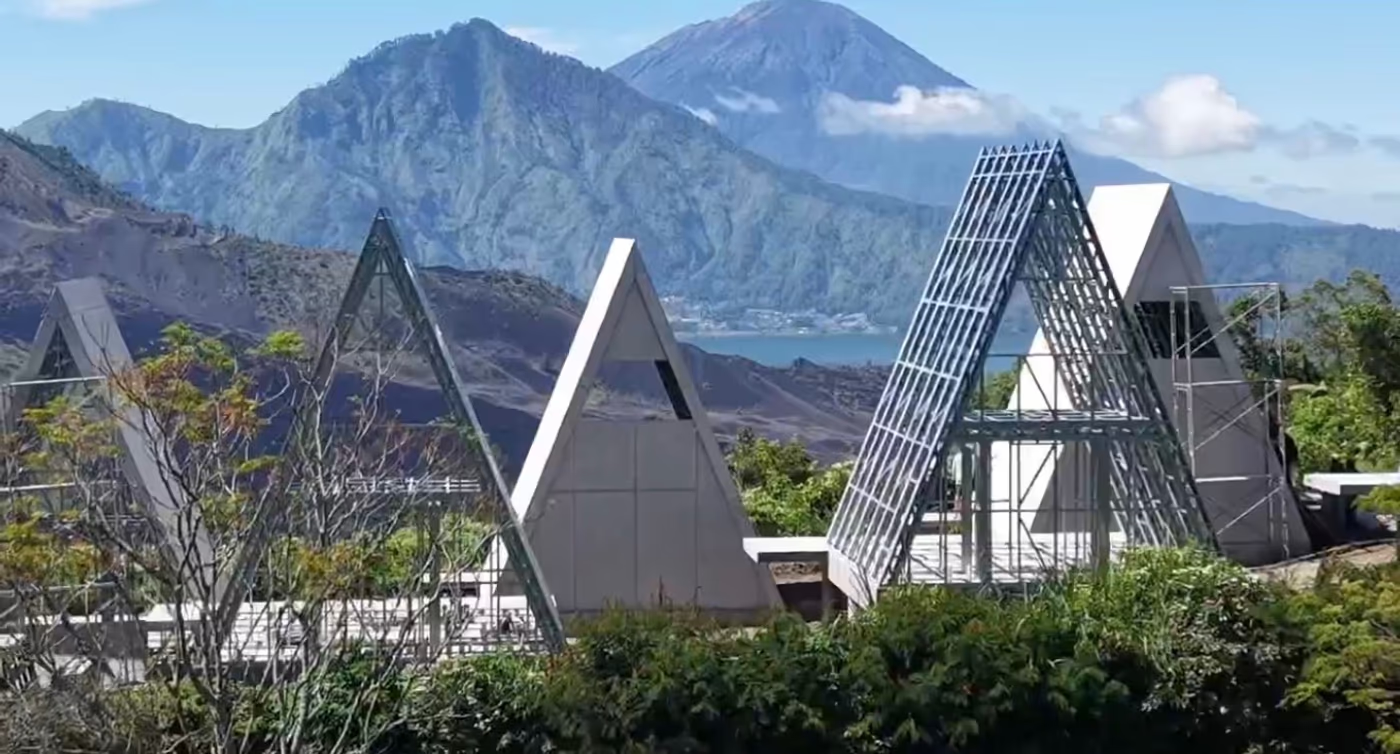 Kintamani, BaliNord NestGRC's first project in Bali. Under construction, on a slope above the Batur caldera.What's includedEight villas, a restaurant, spa, and thermal complexHandoverJanuary 2027AvailableOne stake open as of August 2026Learn more →Live from the construction site
The place existed before us, and it'll outlast us
Architecture follows the land
Every major hospitality brand started as one small project — then became a system.
Amanpuri in Phuket was Aman's first project. Banks wouldn't finance a small resort like it, so the founders funded it themselves. Today, Aman runs 35 hotels and resorts across 20 countries.
Six Senses set out to redefine resort hospitality in 1995. Twenty-four years later, IHG bought the brand and its operating business for $300M — the real estate wasn't part of the deal.
Our Habitas started as a pop-up in Tulum. Today the brand runs 10 resorts across four continents.
One project can be the first piece of something much bigger.
That's exactly the system we're building — a collection of boutique hotels.
How the money in real estate actually moves — from the developer to the investor.
GRC's writing on development, investing, financial models, and what usually gets left out of the pitch deck.
Every investment carries risk. The question isn't whether you can remove it — it's who's holding it, and how it's managed.
Each property gets its own legal entity, incorporated in the country where it's built. You hold a stake in that company, which gives you a proportional claim on everything it owns: land, buildings, infrastructure, equipment. Contracts are bilingual and notarized. Disputes go to international arbitration.
Tell us what you'd like to know and we'll get back to you — on the projects, the model, or how to get in.
This site uses cookies for analytics — Yandex Metrica and Google Analytics. Nothing you type into the form is recorded. Learn more
We'll get back to you within a business day.