We chose a whole small hotel over apartments, single rooms or villas one by one, for three reasons.
First, a boutique hotel earns its premium in the nightly rate: in the US, per Highland Group, it charges more than regular hotels and is no fuller. Second, one company owns the whole hotel, so nobody has to get many room owners to agree.
Third, among Bali’s “hotel-managed residence” projects, about 84% of the villa ones are small, with fewer than 30 villas, so the market mostly offers small projects rather than a whole hotel.
This is part one of a series on how the Nord Nest model came together. It stands on its own. For what a boutique hotel is and how many rooms it has, see our explainer. Here we only compare the options if you are deciding where to put money.
Boutique hotel vs apartment: the premium is in the rate, not occupancy
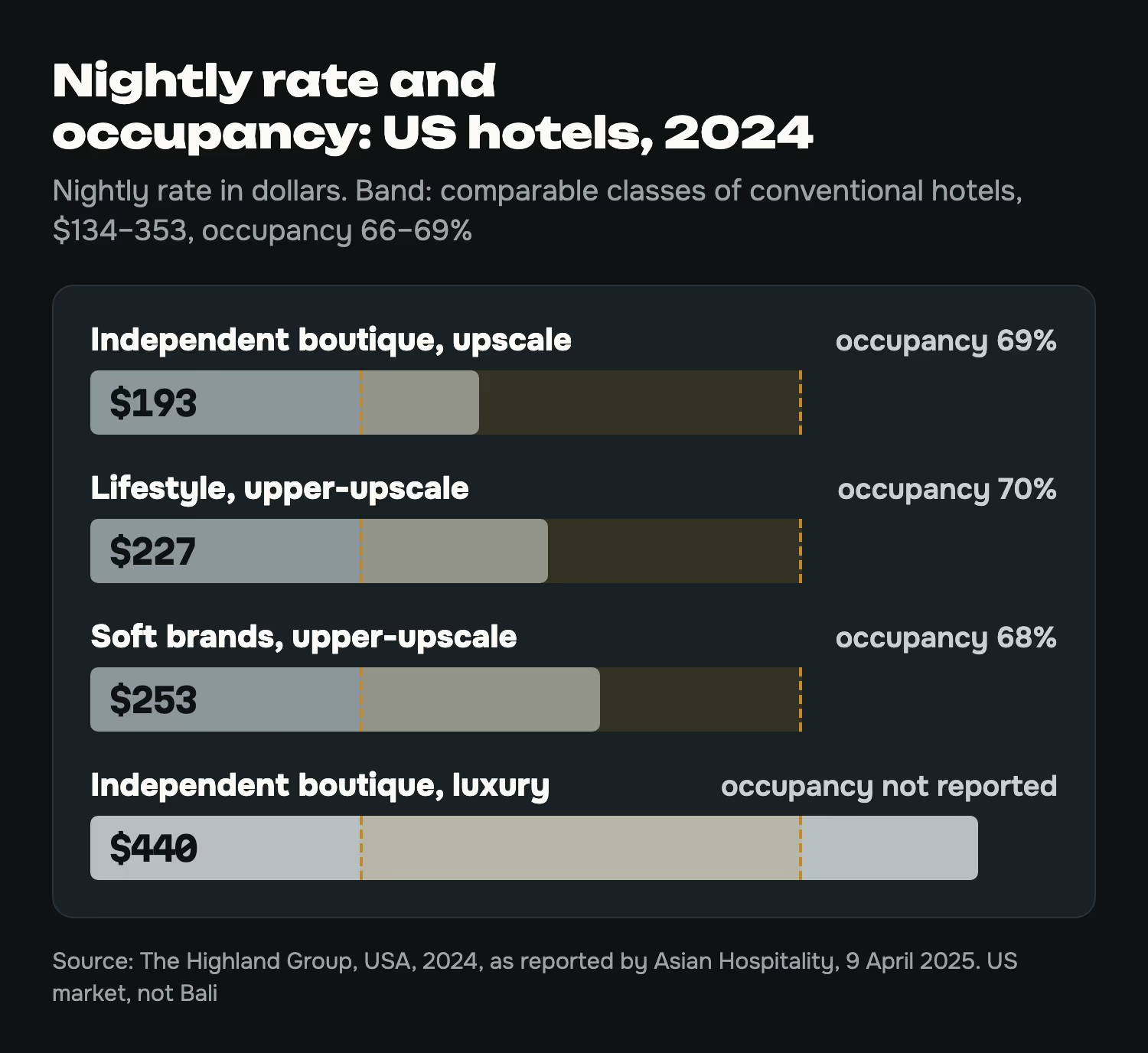
Highland Group, a US hospitality consultancy, tracks boutique hotels as their own segment. In its 2024 report, as retold by the trade outlet Asian Hospitality (the report itself is paywalled), US boutique hotels ran at 57–71% occupancy with a nightly rate of $141–440. Comparable classes of regular hotels: 66–69% and $134–353.
The ranges are wide because they cover every category, but the direction is clear. Boutiques charge more per night and are no fuller. An independent upscale boutique: $193 a night at 69%. A lifestyle upper-upscale hotel: $227 at 70%.
Colliers and Horwath HTL split Bali hotels by price and stars, and don’t single out boutiques. Their numbers do show the other side of a high price. Per Horwath HTL (March 2026), Bali hotels charging over $500 a night run at 49.4% occupancy. At $141–200 it is 74.4%. The higher the rate, the emptier the rooms. The premium has to be earned with service.
Colliers’ July 2026 report expects the same: hotels with wellness, personal service and authentic experiences should do better. That is a consultant’s forecast, not a fact yet.
Here are three sources side by side. Their samples differ, so we draw no “hotels earn 1.5 times more” conclusion from the table:
| Nightly rate | Occupancy | RevPAR | |
|---|---|---|---|
| Bali hotels, 2025 (Bali Hotel Association and Horwath HTL, March 2026) | $150 | about 74% | $111 |
| Bali hotels, Q2 2026 (Colliers, July 2026) | $149–151 | 63–65% | — |
| Bali short-term rentals, year to August 2026 (AirDNA, 29 Sep 2026) | $132 | 57% | $75 |
RevPAR is revenue per available room per night. AirDNA’s rentals mix rooms, cottages and villas; the sources use different periods and methods. Colliers and Horwath disagree on hotel occupancy because their samples differ. For ADR and RevPAR, see our hotel real estate guide.
Investing in apartments: many room owners, one hotel
In Russia, rooms in a hotel can belong to different people, but one legal entity or sole trader has to run the hotel (government decree No. 1951 of 27 Dec 2024). So the hotel has many owners and one operator, and their interests don’t always line up.
In practice income is often split through a pool: equally across a group of rooms, whatever the occupancy (Kommersant, February 2023, quoting developers and operators). Management contracts run ten years or more, and ending one costs penalties (Delovoy Peterburg, October 2025, the paper’s estimate).

Abroad, these disputes reach court. In the US, according to local press (Explore Big Sky, 1 April 2025), condo room owners in three Montana properties filed a class action against the operator. They challenged being forced to rent only through it, and a 50% management fee. The operator denied wrongdoing, and the sides settled for almost $25 million.
In Hawaii, an arbitrator ruled in 2017 that an owners’ association overstepped its powers when it picked a single operator for the whole building. It cancelled the lease of the front desk and the fees imposed only on owners who had left the rental pool (Honolulu Civil Beat, 27 Sep 2017).
While a hotel has many owners, every decision is a negotiation: prices, repairs, switching operator. When one company owns the whole hotel, there are fewer negotiations. The company decides, and the investor holds a share of its profit.
What is for sale in Bali: small villa projects
Per Horwath HTL (March 2026), more than 70 “hotel-managed residence” projects are on sale in Bali. About 84% of the villa projects have fewer than 30 villas.
Short-term rental in Bali is 47,949 listings (AirDNA, August 2026) at an average $132 a night. The south is more crowded still.
In Canggu, from August 2025 to July 2026, occupancy was 36% and a listing’s yearly revenue was $21,244, down 23% on the year before (AirROI, as of 12 Sep 2026). The full breakdown is in our villa yield article.
There are rules too. By 31 March 2026, every short-term rental had to prove it operates legally or be taken off the platforms. A foreigner can’t hold a tourism licence directly: it takes a PT PMA company or a local landowner (Horwath HTL, March 2026).
A single villa has to sort all this out alone; a hotel does it once for the whole complex.
How Nord Nest is built: one hotel instead of a scatter of villas
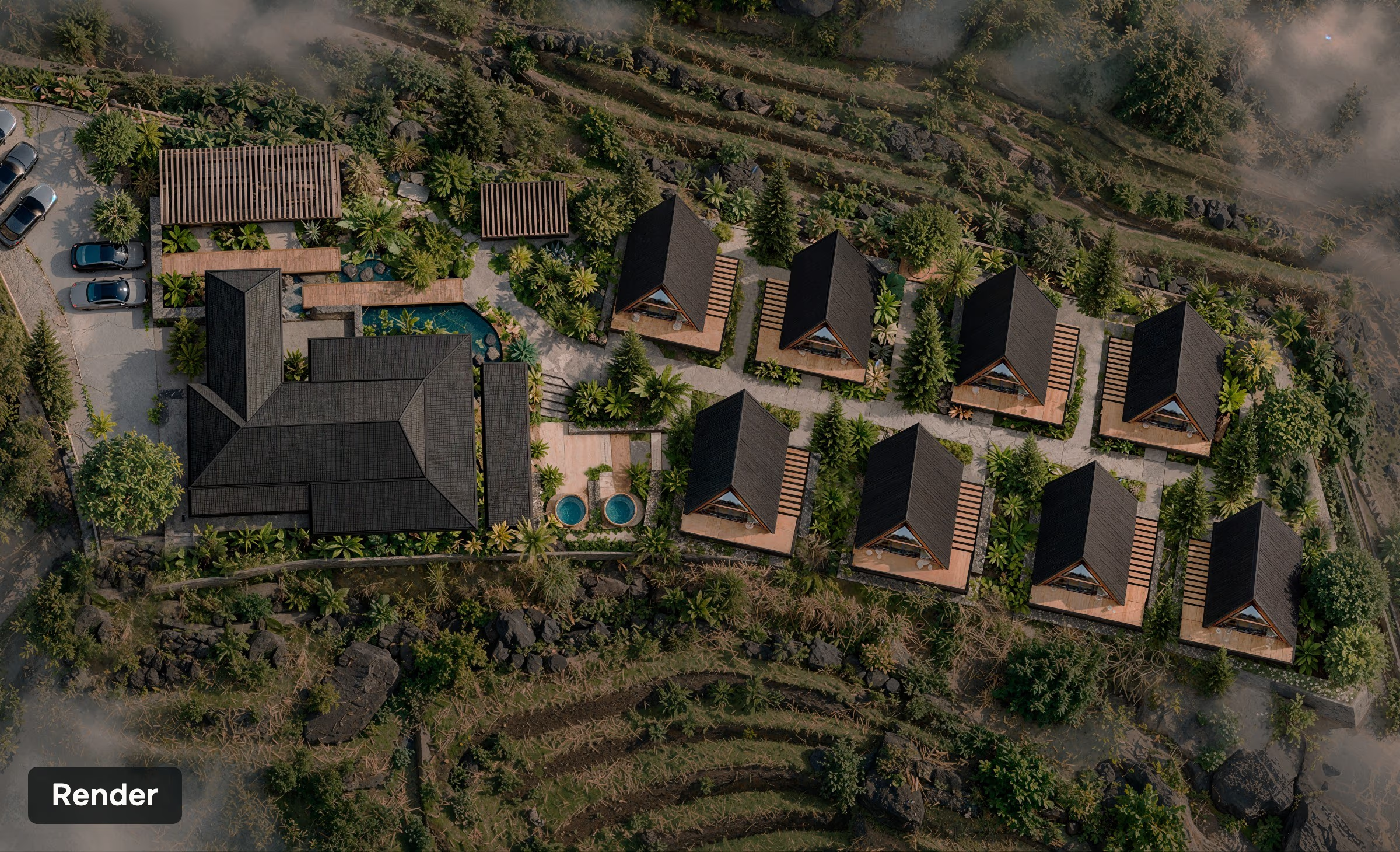
At Nord Nest, in Kintamani, eight villas, a restaurant, a spa and a thermal complex (bathhouse and tubs) belong to one company. It also holds the land lease: 25 years plus a one-year extension. The villas are built and closed in, and handover is planned for the end of February 2027. GRC will run the hotel.
An investor enters through a share in that company: $190,000 for 10%, at construction cost. As of October 2026, 6 of 7 shares are closed.
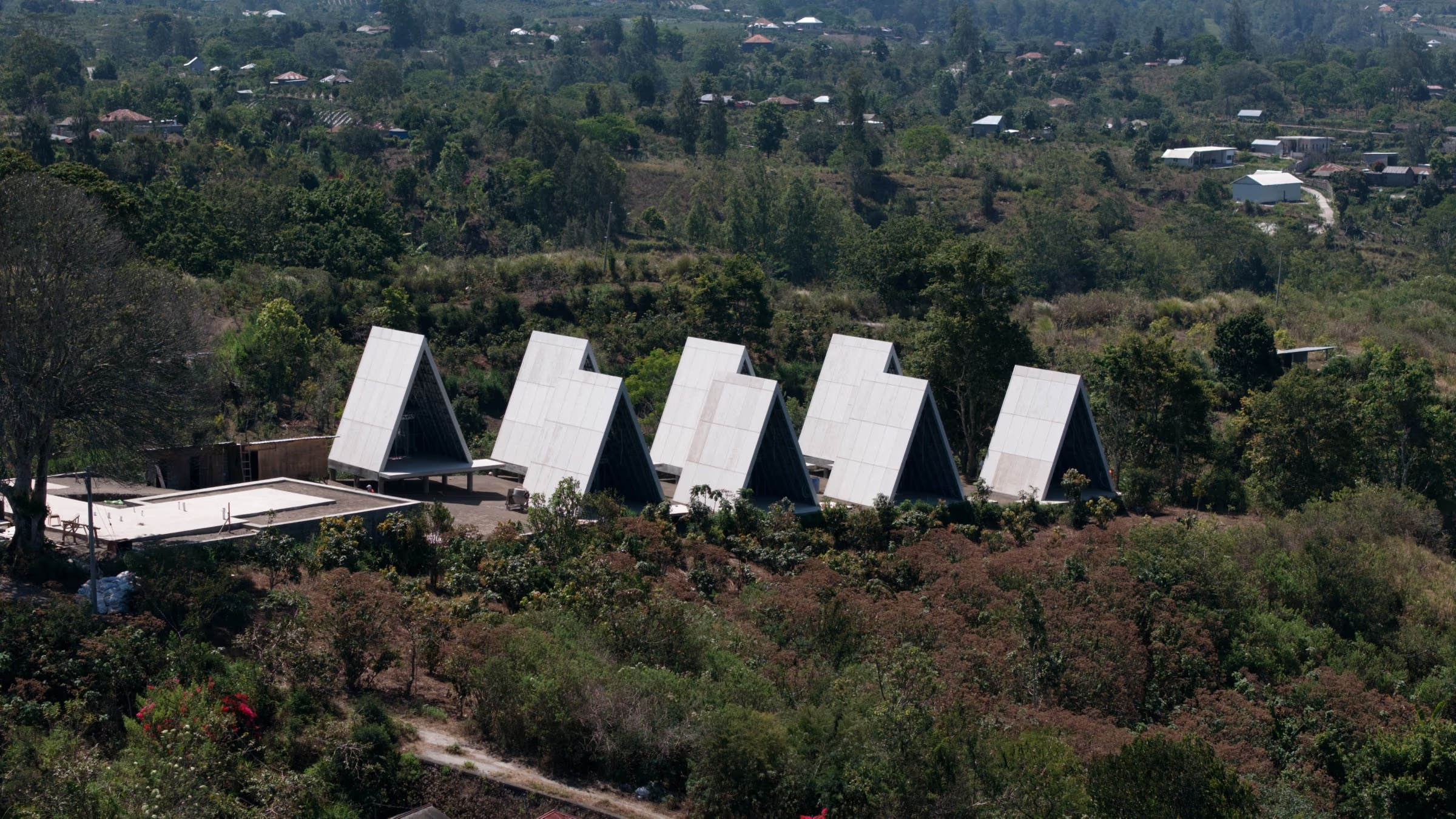
Eight villas is small even for a boutique hotel: Highland Group’s definition starts at 40 rooms, and there is no single definition. The format is the same, though: one property with shared service and one brand. We compared four ways into a hotel, a share included, in Buying a hotel room.
Villas bring in only half of a share’s income. In the model, a 10% share earns $1,493 a month from villas, $1,068 from the spa and thermal complex and $401 from the restaurant (spa occupancy 70%, restaurant 60%). They all sit in one company, so the investor gets 10% of the whole hotel’s net profit, with repairs and management already deducted.
The model’s result is 18.7% a year and a 5.3-year payback, at 80% villa occupancy and a $185 average rate, assumptions as of August 2026. At 50% occupancy it is about 12.5%.
For comparison, AirDNA’s Kintamani figures for August 2026 (12 properties) are $162 a night and 70% occupancy. The model’s assumptions sit above those averages. That is a target, and the hotel’s own numbers will have to prove it.
The deal has a 2-year lock-up. After it, the other co-owners, GRC included, have a right of first refusal: 30 days to answer.
A share is a part of the company. It gives no title to a particular villa or room. The full calculation is on the finance page, and the project is on the Nord Nest page.
FAQ
Which is better: a boutique hotel or an apartment?
It depends on what you are buying. An apartment is a room in someone else’s hotel, with someone else’s operator and a shared pool. A share in a boutique hotel is a part of the whole hotel’s profit. Boutiques earn their premium in the rate: per Highland Group, US boutiques are no fuller than regular hotels.
Does a boutique hotel earn more than a regular one?
It charges more per night, by US data for 2024: $141–440 against $134–353. For Bali, open reports split hotels by price and stars and don’t single out boutiques.
Why not just buy one villa in Bali?
A single villa means its own manager and its own licence, and it competes with tens of thousands of listings. In the table above, Bali short-term rentals run at 57% occupancy and hotels at 63–74%, depending on the source. The samples differ: AirDNA’s rentals include rooms too. What a villa owner keeps after all the commissions is in The queue for the money.
How is a share in a hotel different from a room?
A room is a specific space with a specific operator. A 10% share is part of the company that owns the whole hotel: villas, spa, restaurant and the land lease.
What if occupancy comes in below the model?
Then income is lower: 18.7% a year is the model’s result at 80% villa occupancy and a $185 rate, assumptions as of August 2026, and at 50% it is about 12.5%. There are no guarantees. The full model is on the finance page.
What’s next
Part two of the series is about location: Best area to invest in Bali: remoteness isn’t protection.