A boutique hotel is a small hotel with its own character and a high level of service, run by one team. There is no official “boutique” class in Russia or in Indonesia. In law it is simply a hotel.
The edges of the format are blurry. Sources put it anywhere from 40 to 300 rooms, most often under 100–150. Data as of 26 October 2026.
What a boutique hotel is, and whether the law has such a class
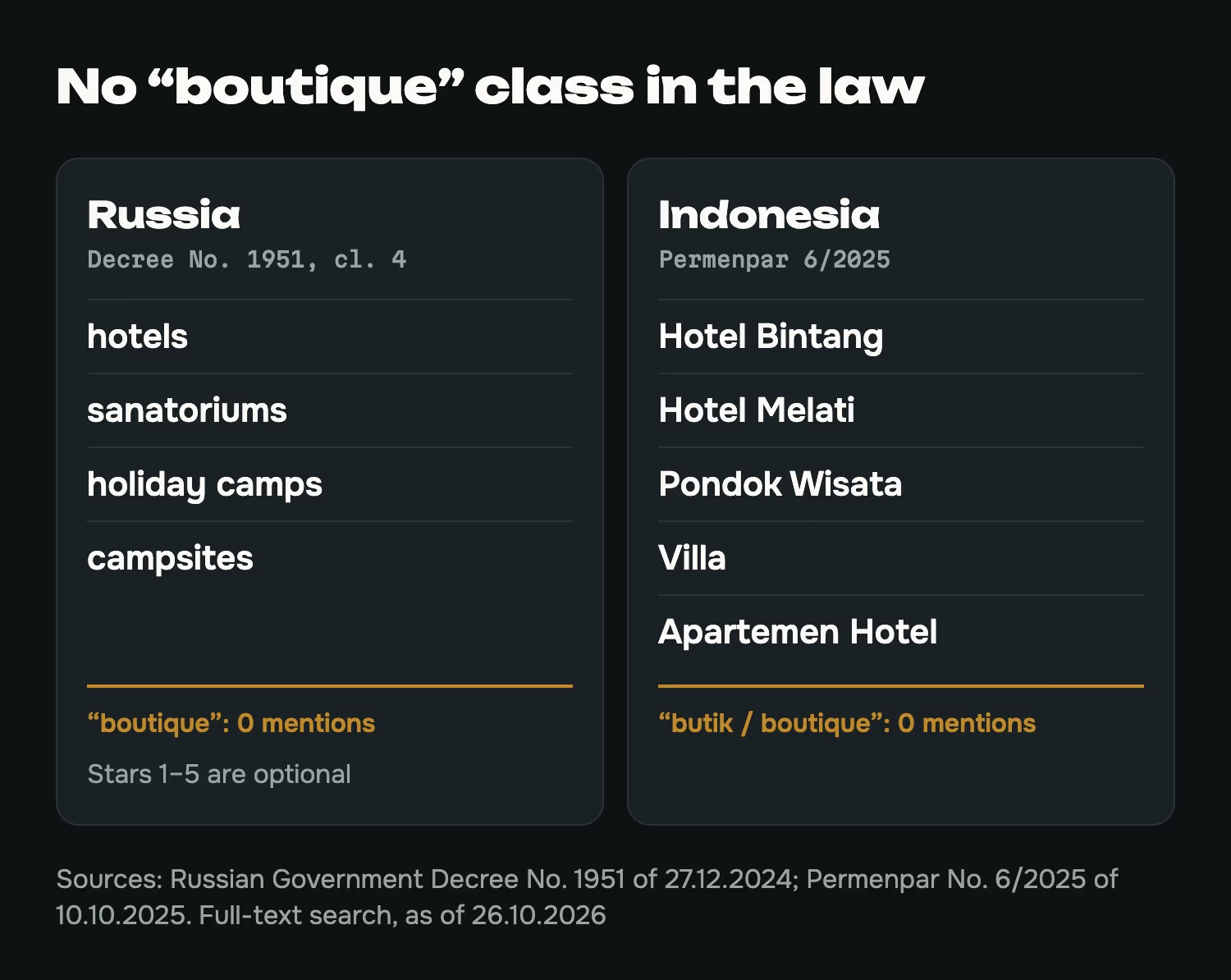
Indonesia has no such class either. The current Permenpar No. 6/2025, dated 10 October 2025, has no “butik” or “boutique”. It lists Hotel Bintang (starred), Hotel Melati (no stars), Pondok Wisata, Villa and Apartemen Hotel.
A small hotel in Bali falls into the first two, and “boutique” is what the market calls it.
Russia works the same way. Its Regulation on the classification of accommodation (Decree No. 1951 of 27 December 2024) lists four types: hotels, sanatoriums, holiday camps, campsites.
The word “boutique” does not appear. Legally a boutique hotel is a hotel, and stars, one to five, are optional.
Researchers have tried to pin it down. A survey of 41 experts did not produce one definition, but it described boutique hotels as “small, stylish hotels that offer high levels of service” (Jones, Day, Quadri-Felitti, 2013).
How many rooms a boutique hotel has
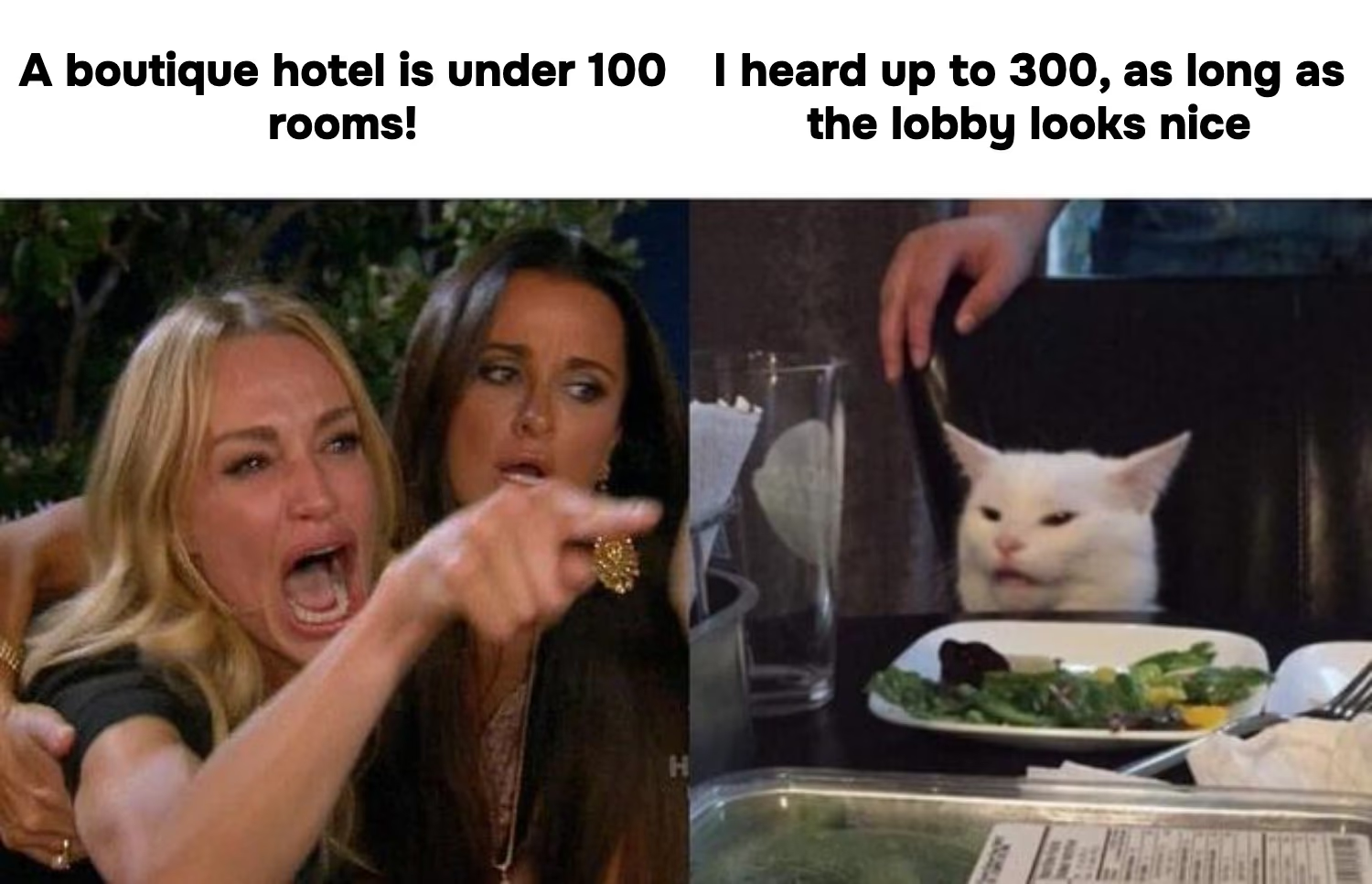
There is no single number. Here is what different sources say:
- around 100 or fewer, “on average”, says the boutique and lifestyle hotel association (press release, 2010);
- no more than 150: according to an HVS review, that is what most market players think (Hospitality Net, 2001);
- 40 to 300, in a report by The Highland Group and STR (CoStar, 2015);
- size does not matter, in the words of one of the format’s founders: it is an approach and an attitude. His hotels have 594 and 821 rooms (same HVS text).
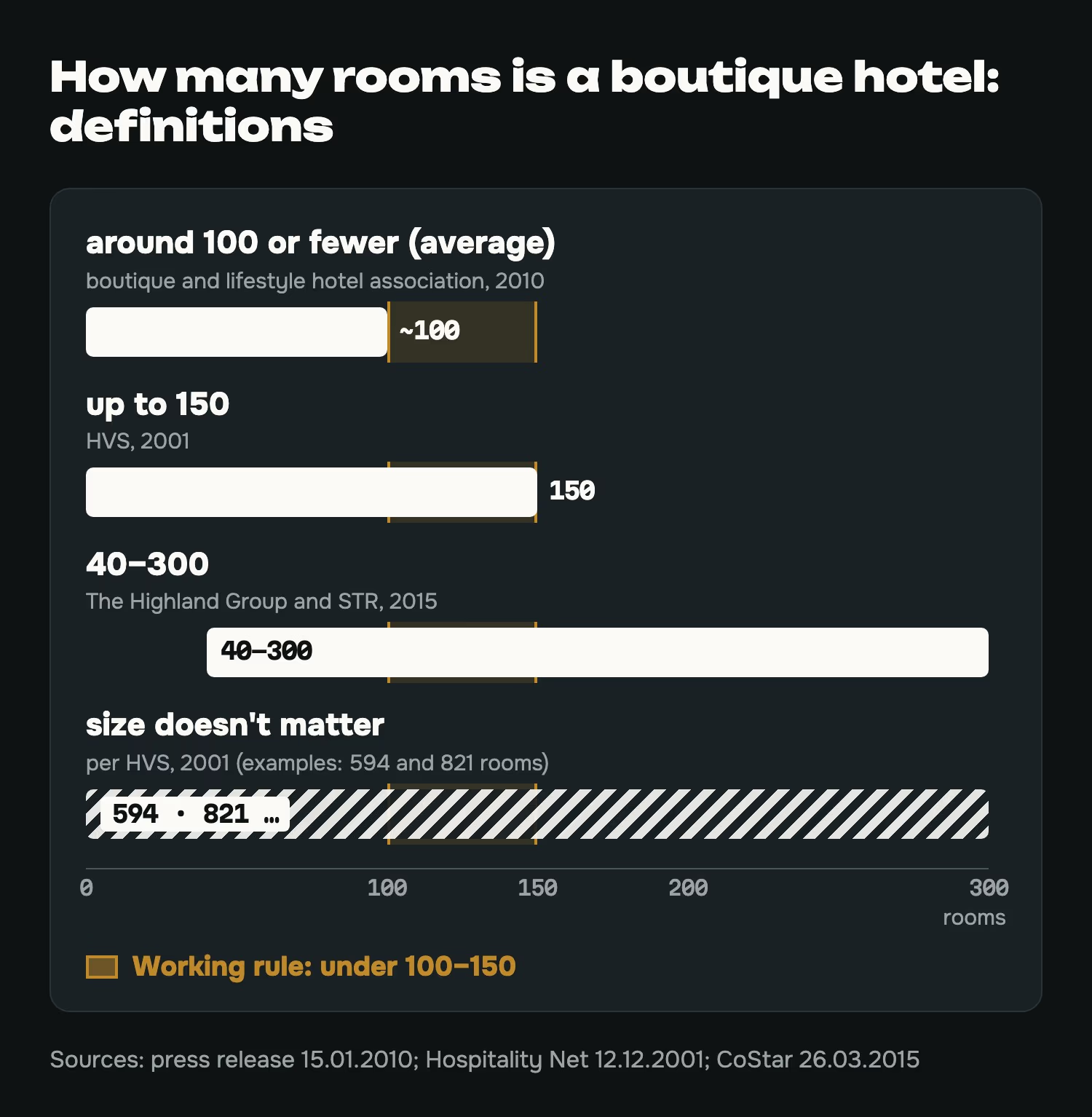
A working rule: under 100–150 rooms. Above that it is closer to a lifestyle or a regular hotel.
A boutique next to a chain
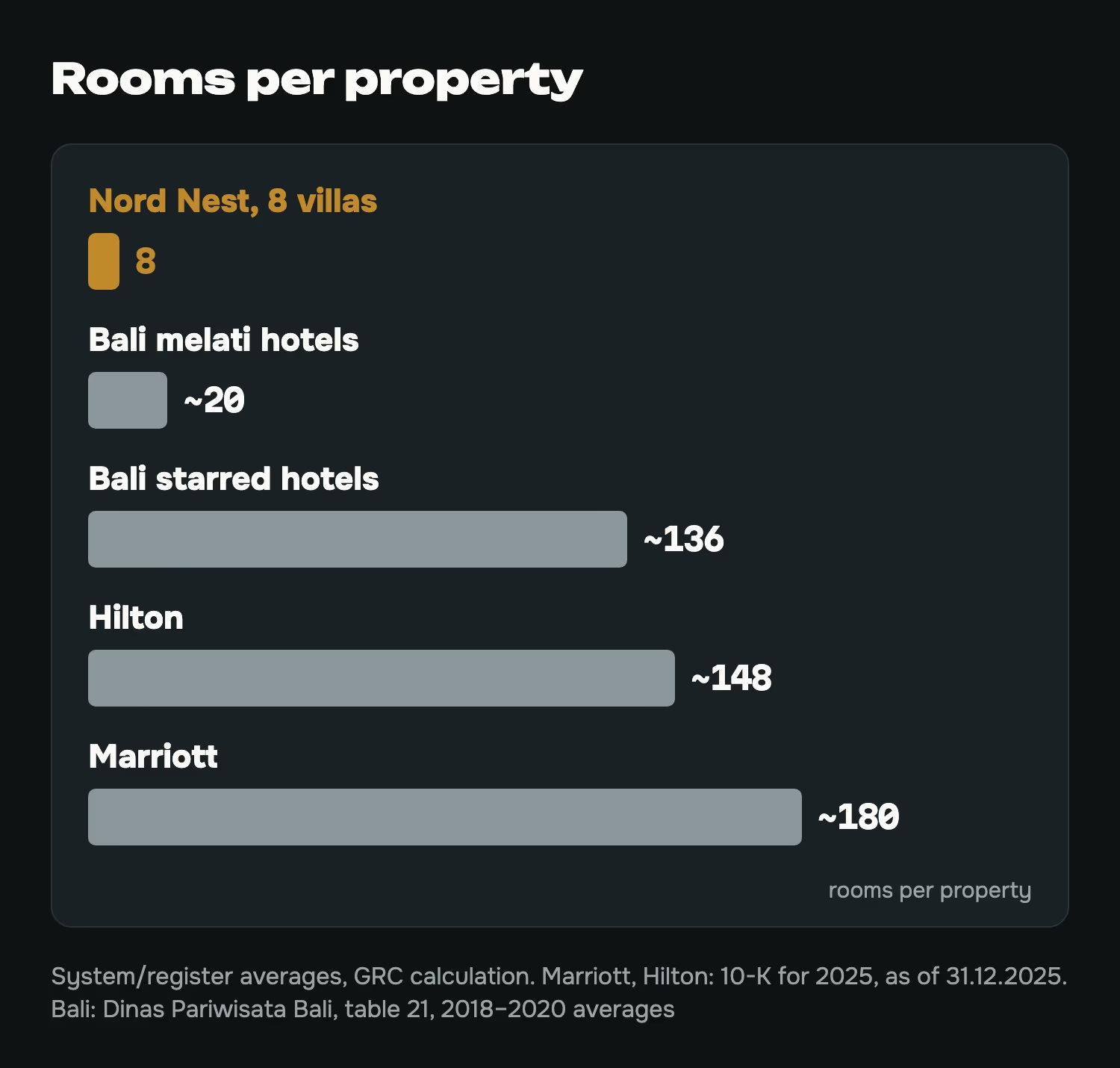
Average property size at the big chains, from their 2025 annual reports (as of 31 December 2025, division ours):
- Marriott: 1,779,936 rooms across 9,805 properties, about 180 per property;
- Hilton: 1,351,351 rooms across 9,158 properties, about 148 per property.
These are averages across whole systems, small city hotels included. They do not show the size of a typical chain resort.
In Bali, starred hotels average about 136 rooms, and unstarred ones (melati) about 20. That is from the Bali tourism office for 2018–2020 (Dinas Pariwisata, table 21). Room counts for later years do not add up in the source, so we leave them out.
Nord Nest has 8 villas.
How a boutique hotel differs from a regular hotel and an aparthotel
We compare three formats on four questions: how many rooms, who runs it, what the guest pays for and what the investor buys.
Boutique hotel
- Rooms: usually under 100–150, no fixed limit.
- Who runs it: one team per property.
- What the guest pays for: the place, the character, the service.
- What the investor buys: depends on the model, the whole property or a share in it.
Chain hotel
- Rooms: system average about 150–180 (Hilton, Marriott).
- Who runs it: the chain under a management agreement, or the owner under a brand franchise.
- What the guest pays for: a recognisable brand standard.
- What the investor buys: the whole hotel, with a brand agreement of about 20 years.
Aparthotel
- Rooms: not set, it is a type of hotel, not a size format.
- Who runs it: one operator for the whole building.
- What the guest pays for: hotel service, often a room with a kitchenette.
- What the investor buys: a room as a property, run by an operator.
In Russia an aparthotel is a kind of hotel (clause 5 of the same Decree No. 1951). Rooms can belong to different people while management is single. We explain how this works in Buying a hotel room.
“Boutique” and “aparthotel” answer different questions: what kind of hotel it is, and what exactly you are buying. An aparthotel can be a boutique.
What makes a boutique hotel special
A chain hotel sells sameness: a room in any city should feel familiar. A boutique sells a specific place and specific people. Guests come for the view, the restaurant, the spa and the way they are received.
That is easier to deliver in a small hotel. Staff get to know the guests, and problems get solved on the spot without going up a chain of approvals. High service made it into how researchers describe boutique hotels for a reason.
To us, what sets a boutique apart is the reason to come. Nord Nest has several: the villas, the restaurant, the spa and the thermal complex.
Why a small hotel works for the guest, the operator and the investor
Our argument: in a small property a mistake costs less. We draw that from how the industry works. We haven’t put a number on it.
- For the guest. They are noticed, and the person who sees a slip is the one who fixes it.
- For the operator (at Nord Nest, that’s us, GRC). One team makes the decisions, and the menu, prices or mix of services can change within a season.
- For the investor. A mistake in the concept costs less: the property can be repurposed or sold whole. We don’t hand the hotel to an outside management company, which typically takes 20–30% of revenue; our own team runs it.
A chain runs on longer terms. In Hilton’s 2025 annual report, a management agreement runs for a first term of typically 20 to 30 years, and a franchise for about 20 years on a new hotel.
Add a property improvement plan the owner must complete to stay in the system. A mistake in the concept or the room mix takes a long time to fix.
At GRC we work to a rule: the make-up of a property changes in a season, not in five years. A 200-room hotel can’t do that.
Several income streams help too: villas, spa, restaurant, thermal complex. Even if no one is staying in the villas, the restaurant and spa still work. And co-owners number from one to seven: a small circle, where it is clear who is responsible for what and who carries which risk.
Our boutique hotel: Nord Nest
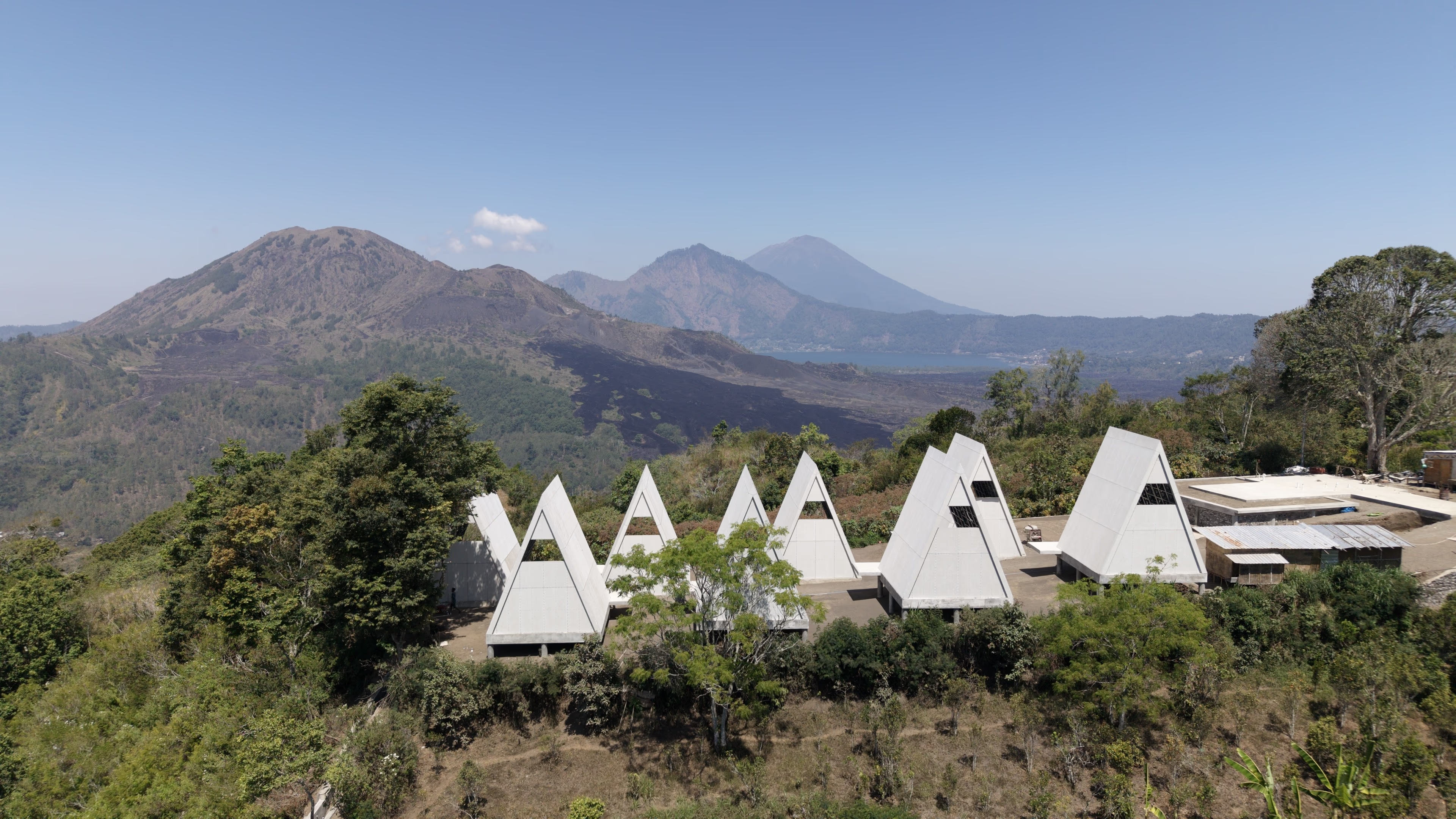
Nord Nest in Kintamani has 8 villas, a restaurant and spa under one roof (one building) and a thermal complex: sauna and hot tubs. There is no swimming pool.
Construction is under way: all 8 villas are up and clad, and the electrics are laid. The restaurant and spa have their foundation done; the frames were scheduled for the first half of October.
Handover is planned for the end of February 2027. Nord Nest is the first GRC project open to investors. More on the Nord Nest page.
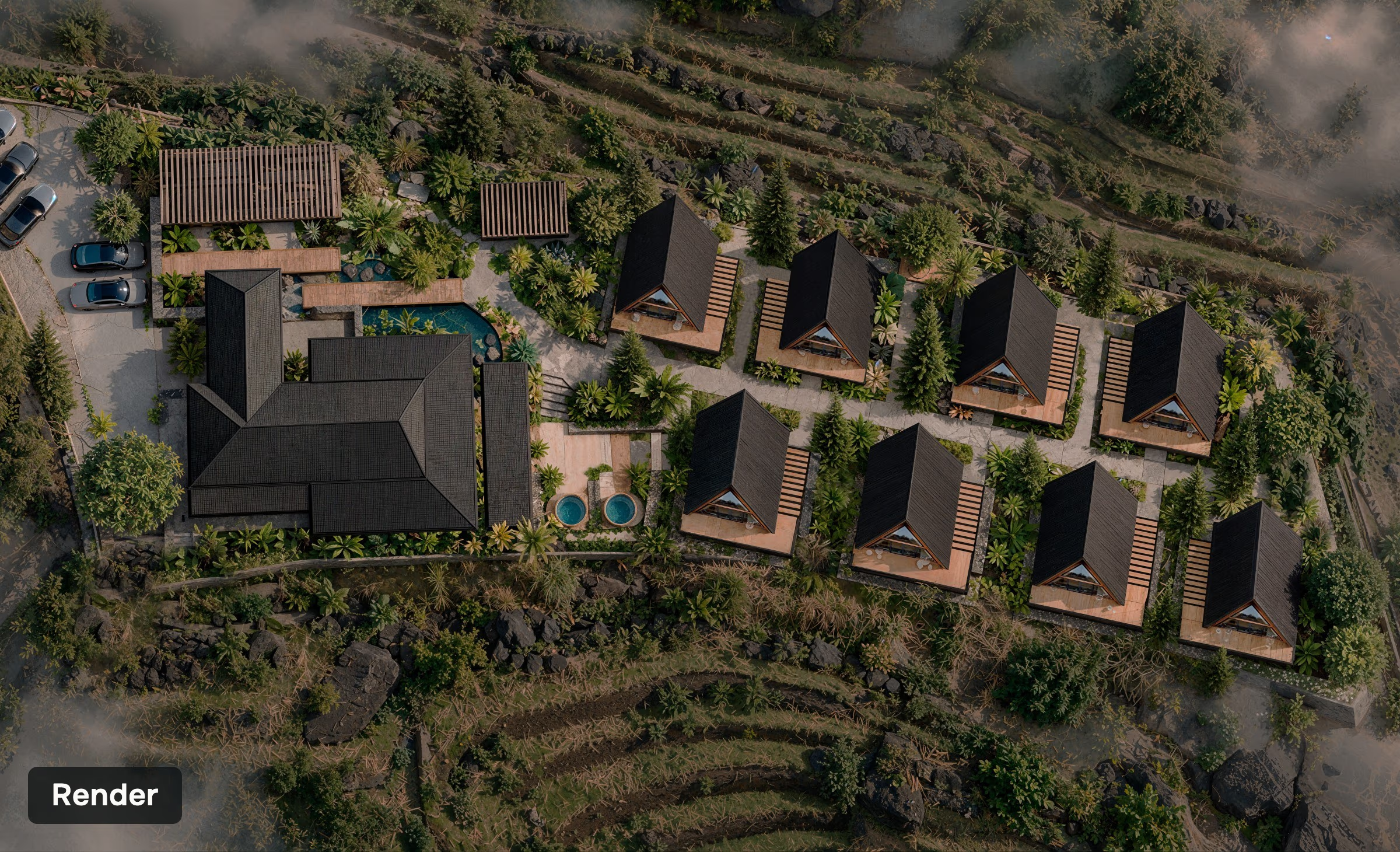
An investor takes a share in the whole hotel: the villas, spa, restaurant and the land lease. A share is part of the profit of the whole hotel, not a specific villa. Lock-up is 2 years.
In our model, at 80% villa occupancy and a $185 rate, the yield is 18.7% a year; at 50% occupancy it is about 12.5%. Assumptions as of August 2026. These are model figures, not a promise.
The full model and terms of entry are on the Finance page.
In short
- There is no official “boutique hotel” class in Russia or Indonesia: it is a market term.
- No single definition: sources say 40 to 300 rooms, most often under 100–150.
- A chain property is bigger on average: Hilton about 148 rooms, Marriott about 180.
- A boutique sells a place and people, a chain sells a recognisable standard.
- In a small property a mistake costs less: the make-up changes in a season, a chain agreement runs about 20 years.
- Nord Nest: 8 villas, restaurant and spa, thermal complex; handover planned for the end of February 2027.
FAQ
What is a boutique hotel in simple words?
A small hotel with its own character and a high level of service. Usually under 100–150 rooms, though there is no fixed limit. The law has no such class.
How many stars does a boutique hotel have?
Any number, or none. In Russia stars are optional, and “boutique” has nothing to do with the category: a small hotel can have no stars or five. In Indonesia it is the same: Hotel Bintang (starred) or Hotel Melati (no stars).
How is a boutique hotel different from a guesthouse or a villa?
A hotel rents out rooms, with single management and services such as a restaurant, a spa and staff. In Indonesian rules a villa is a building rented as a whole. Pondok Wisata, the nearest thing to a guesthouse, is lodging in the owner’s home: about 4 rooms on average (Dinas Pariwisata, 2019).