We compared Bali, Turkey, Dubai and Thailand on foreign ownership law, taxes, rental revenue and currency. Choosing a country means choosing who stands in line for your money ahead of you: the state, the exchange rate, the booking platform and the management company. Bali is not the default winner. On purchase tax and residency, Turkey and Dubai are stronger; on revenue per listing, Dubai is.
How we compared
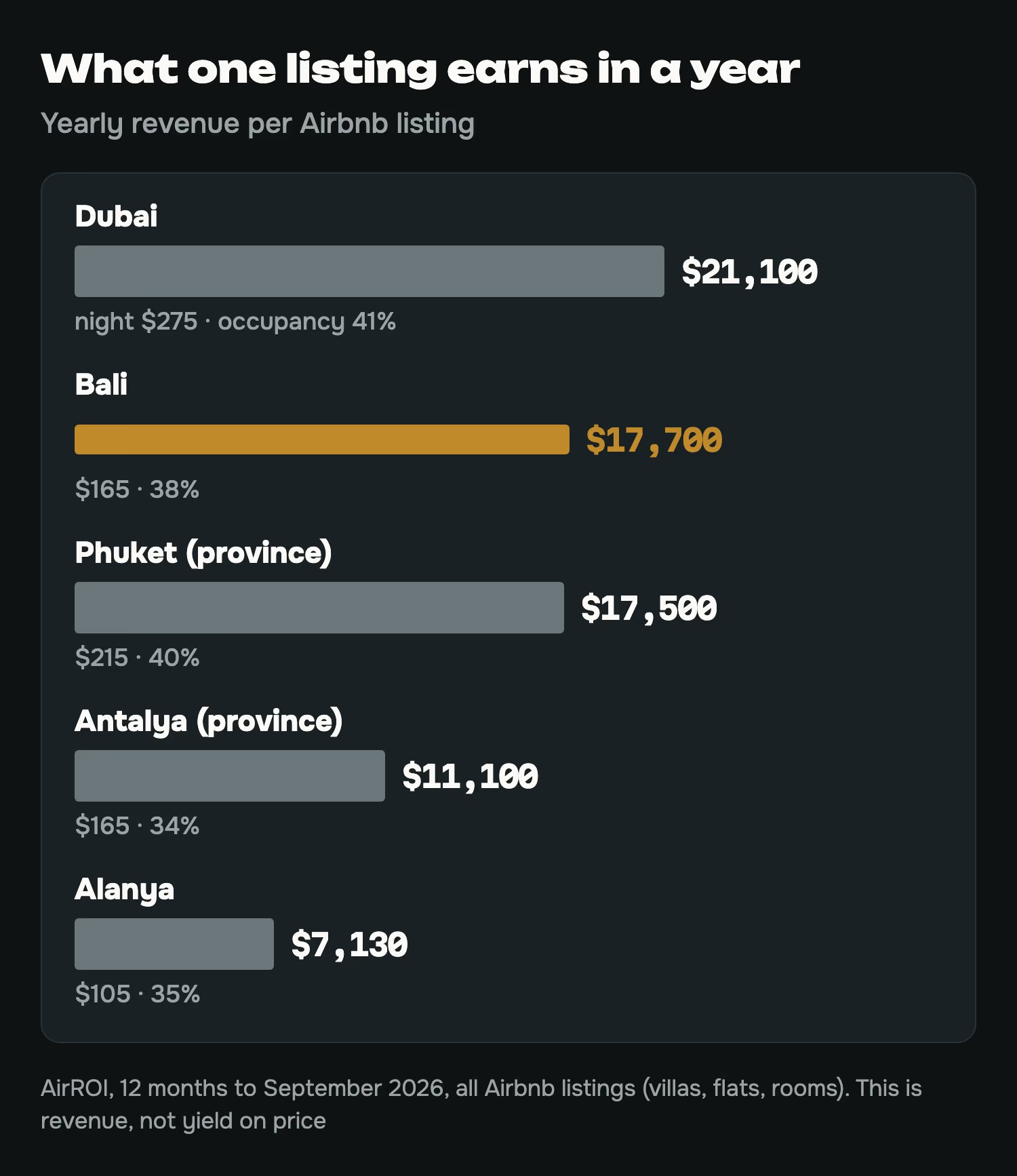
For rental revenue we use one source for all four places: AirROI, 12 months to September 2026. It gives average annual revenue per Airbnb listing, not yield on price, because the service has no purchase price. So we do not calculate a percentage of price.
AirROI shows occupancy of 34–41% everywhere. AirDNA shows more for the same places: Antalya 55%, Phuket 63% (figures from search results, the pages themselves did not load). The services do not explain it; they probably count “available nights” differently. We do not treat either as the truth.
Also, “tourist” means different things to the statistics offices of Bali, Antalya, Dubai and Thailand. The visitor numbers below sit side by side, but they are not like-for-like.
Property investment in Bali: you lease, you do not own
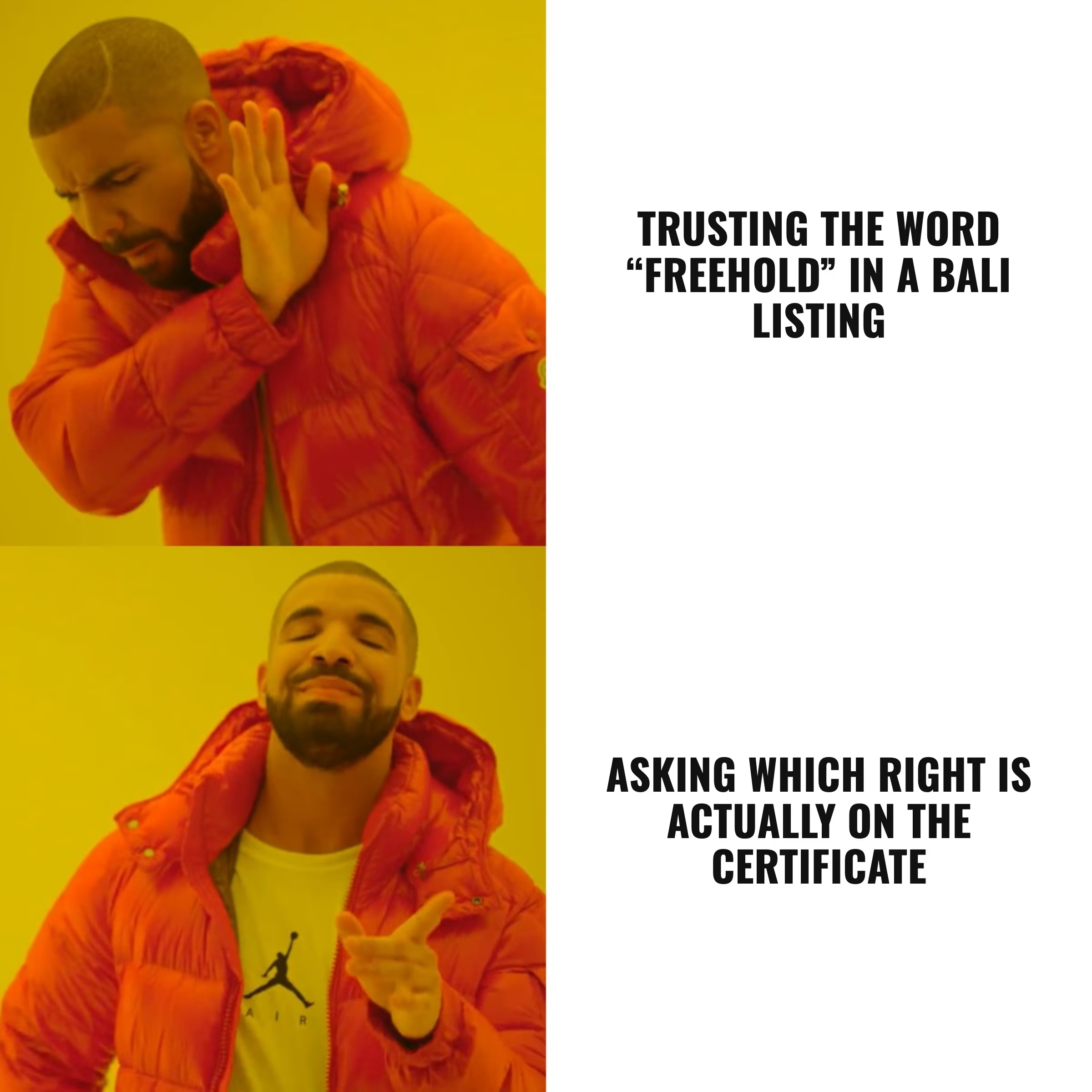
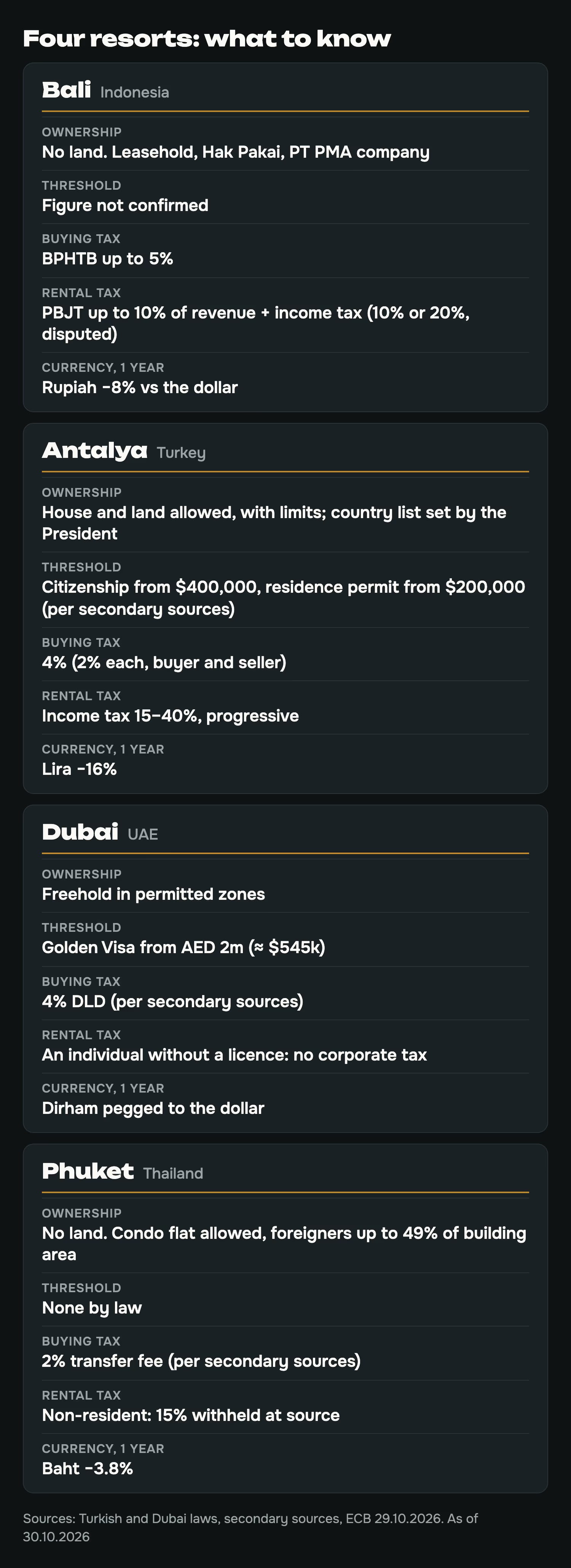
A foreigner cannot buy land. Freehold title (Hak Milik) belongs to Indonesian citizens only. Foreigners get a lease, Hak Pakai for a home, or a PT PMA company. In our sample of listings, the median remaining lease on villas is about 27 years (36 leasehold villas, 27 Oct 2026; more on leasehold).
Purchase tax is capped at 5% (BPHTB). In Bangli, Denpasar and Gianyar it is exactly 5% above Rp 80 million, paid by the buyer. The law does not say how it applies to a lease.
Each year there is a land and building tax of 0.1–0.2% of the assessed value in Bangli (not of the price). Nightly rentals carry a tax of up to 10% of revenue.
Income tax on a non-resident’s rent is read by consultants as either 10% or 20%, with no official position. See the tax breakdown for Bali.
AirROI puts revenue at $17,700 a year per listing, $165 a night, 38% occupancy. Foreign tourists from January to August 2026: 4,586,959, down 1.62% on last year (BPS definition). The rupiah went from 16,666 to 18,143 per dollar over the year, down 8%.
There is no general moratorium on new villas, but permits on productive land are not issued.

Property investment in Turkey: you can own, and the rates are set out in the law
A foreigner can own a house and land if their country has not been closed by presidential decision. The law limits you to 10% of a district’s area and 30 hectares per person. The president decides the country list, so check it on the date of the deal.
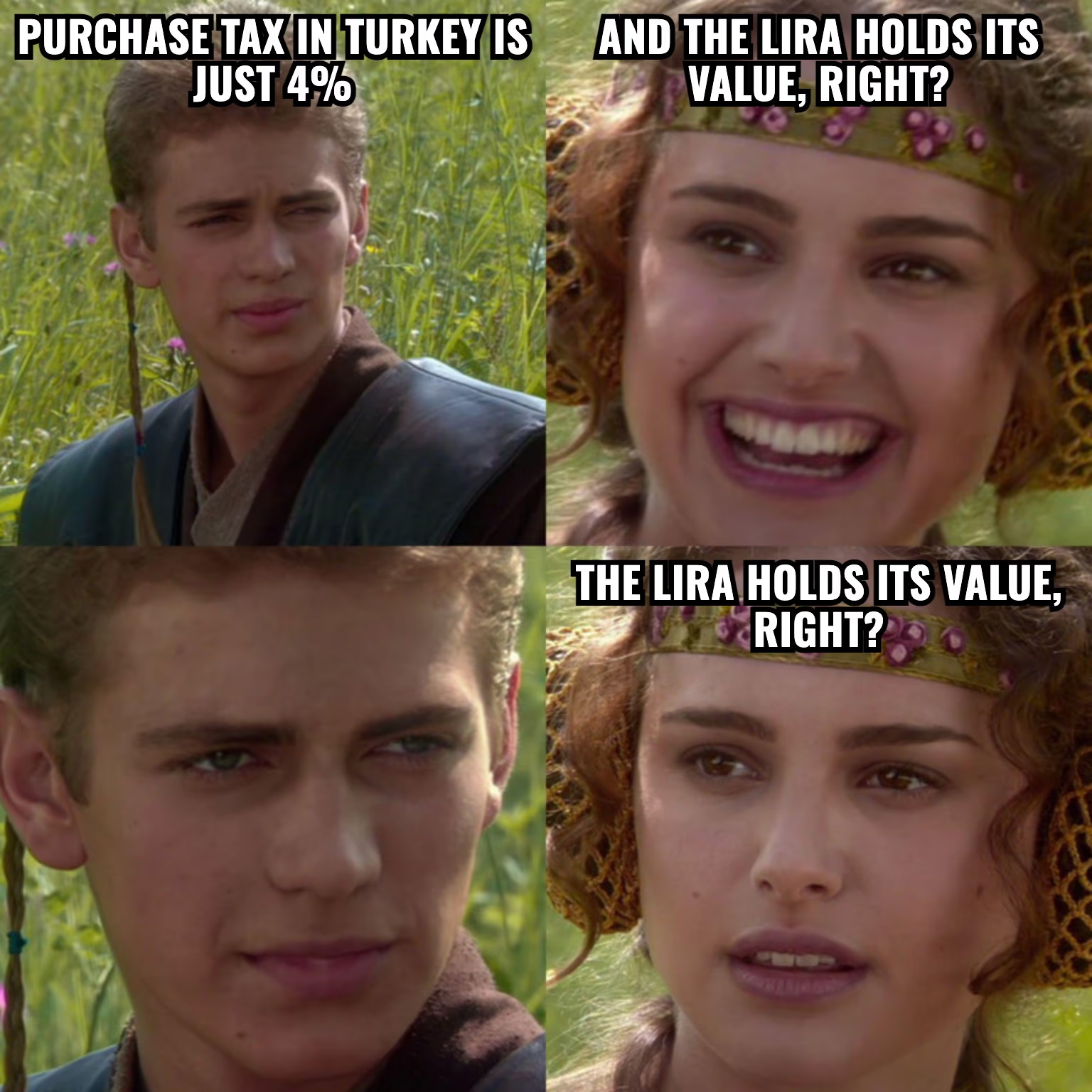
The purchase tax is set out in Law 492: 2% from the buyer and 2% from the seller, 4% together. The building tax is 0.1% of assessed value for housing, double inside a metropolitan municipality (check the rate for Antalya separately). Rental income is taxed on a 15–40% scale; we did not verify how it applies to a non-resident, so ask a tax adviser.
According to law-firm guides, status is available: citizenship from $400,000 (an appraiser confirms the value, with a three-year ban on resale) and residency from $200,000. We could not get the regulation text.
AirROI revenue: Antalya province $11,100 a year per listing, $165 a night, 34% occupancy; Alanya $7,130, $105, 35%. AirDNA gives $23.5k (August 2026) and 55% occupancy for Antalya, twice the revenue, so we show both.
Foreign visitors from January to August 2026: 11,023,586, down 5.8% (per AA). The main risk is money: inflation of 29.73% for the year to September 2026, and the lira down 16% against the dollar (41.99 to 49.84).
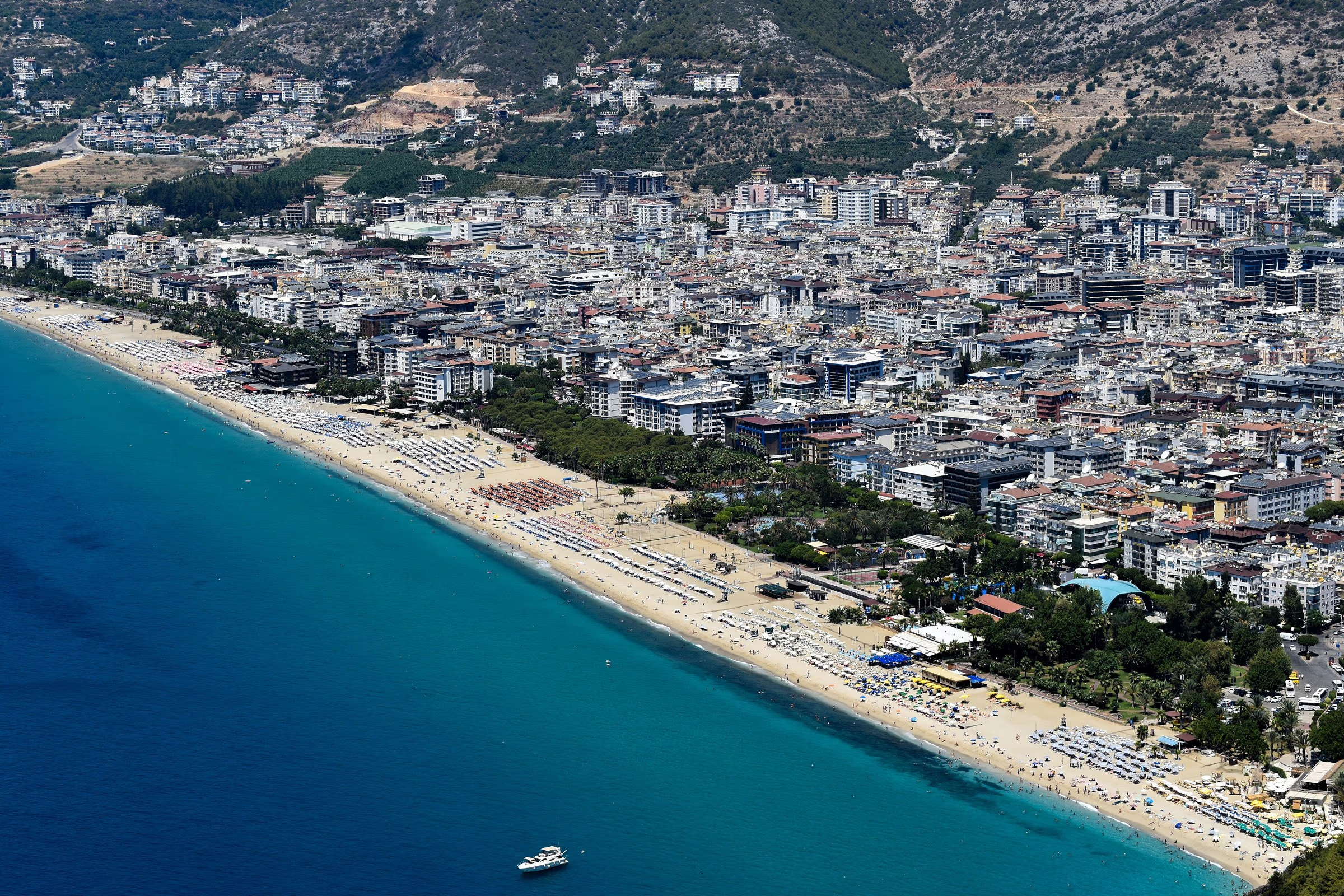
Property investment in Dubai: freehold and rental tax
Dubai Law No. 7 of 2006 lets foreigners hold freehold in zones set by the ruler, plus leases of up to 99 years. Bali has nothing like it. Registration at the Dubai Land Department is 4% on purchase according to law-firm guides, plus small administrative fees.
We found no annual property tax in our sources (we did not look at municipal charges). Rent received by an individual without a licence sits outside corporate tax, according to a UAE Ministry of Finance statement of 17 May 2023. The 9% rate appears if the letting is set up as a licensed business with turnover above AED 1 million.
For residency, a Golden Visa on a purchase from AED 2 million (about $545k), according to law-firm guides. The dirham is pegged to the dollar, so there is no currency loss against it.
AirROI revenue: $21,100 a year per listing, $275 a night, 41% occupancy, the highest in the sample. Visitors in 2025: 19.59 million, up 5% (DET figures as reported in the press). We found no 2026 figures.
The risk is supply. Fitch in May 2025 expected a moderate price correction of up to 15% and about 120,000 apartments delivered in 2026. Whether that forecast came true, we do not claim.
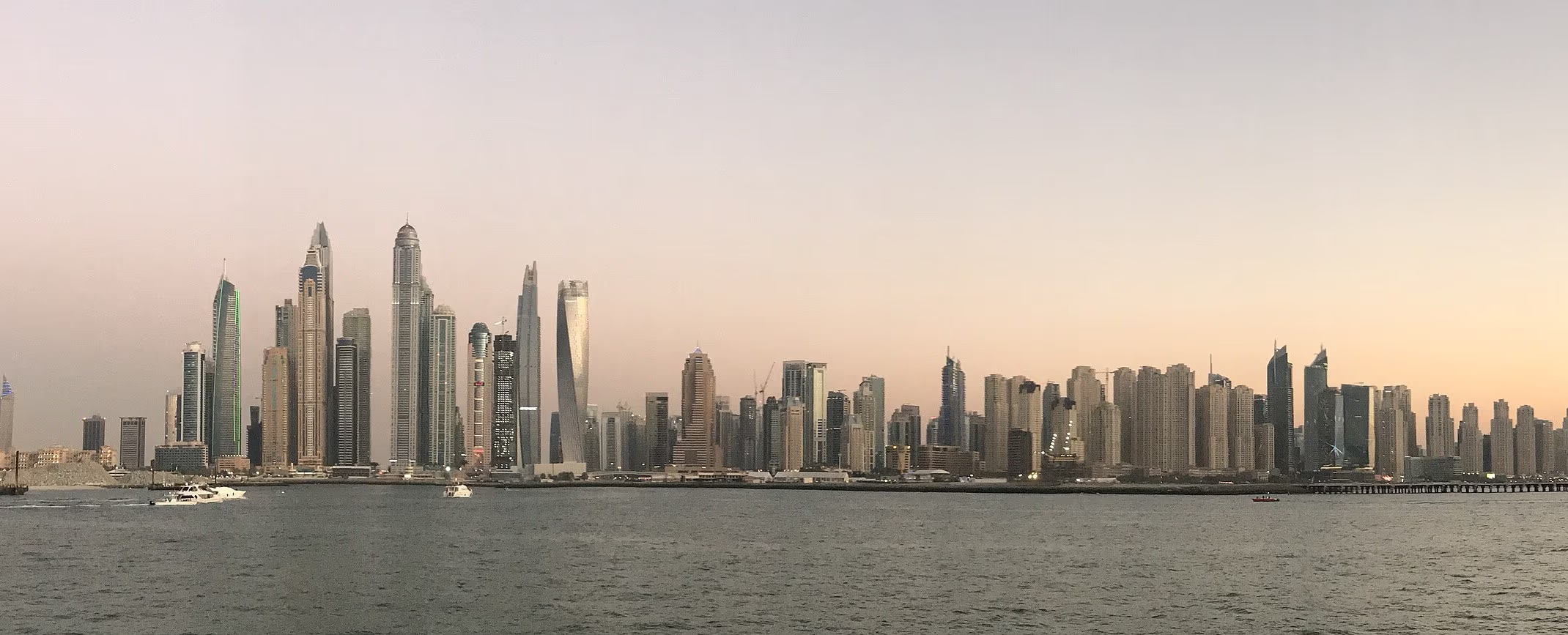
Property investment in Thailand: a condo yes, land no
We could not get the texts of Thai laws, so what follows comes from law-firm guides; arrivals are TAT data as reported in the press.
A foreigner cannot own land. A condo is allowed, but foreigners together can hold no more than 49% of a building’s area (under the Condominium Act). Land can be leased for 30 years. A rise in the quota to 75% has been discussed, and as of August 2026 nothing has been adopted.
There is no legal minimum price. On purchase there is a transfer fee of 2% of assessed value (usually split). The land and building tax is capped at 0.3% for housing. A non-resident pays 15% withholding on rent, which is not the final tax.
AirROI for Phuket province: $17,500, $215 a night, 40% occupancy. AirDNA says 63%. Foreign arrivals from January to August 2026: 6,790,293, with Russia the top market. The baht lost 3.8% over the year (32.47 to 33.76).
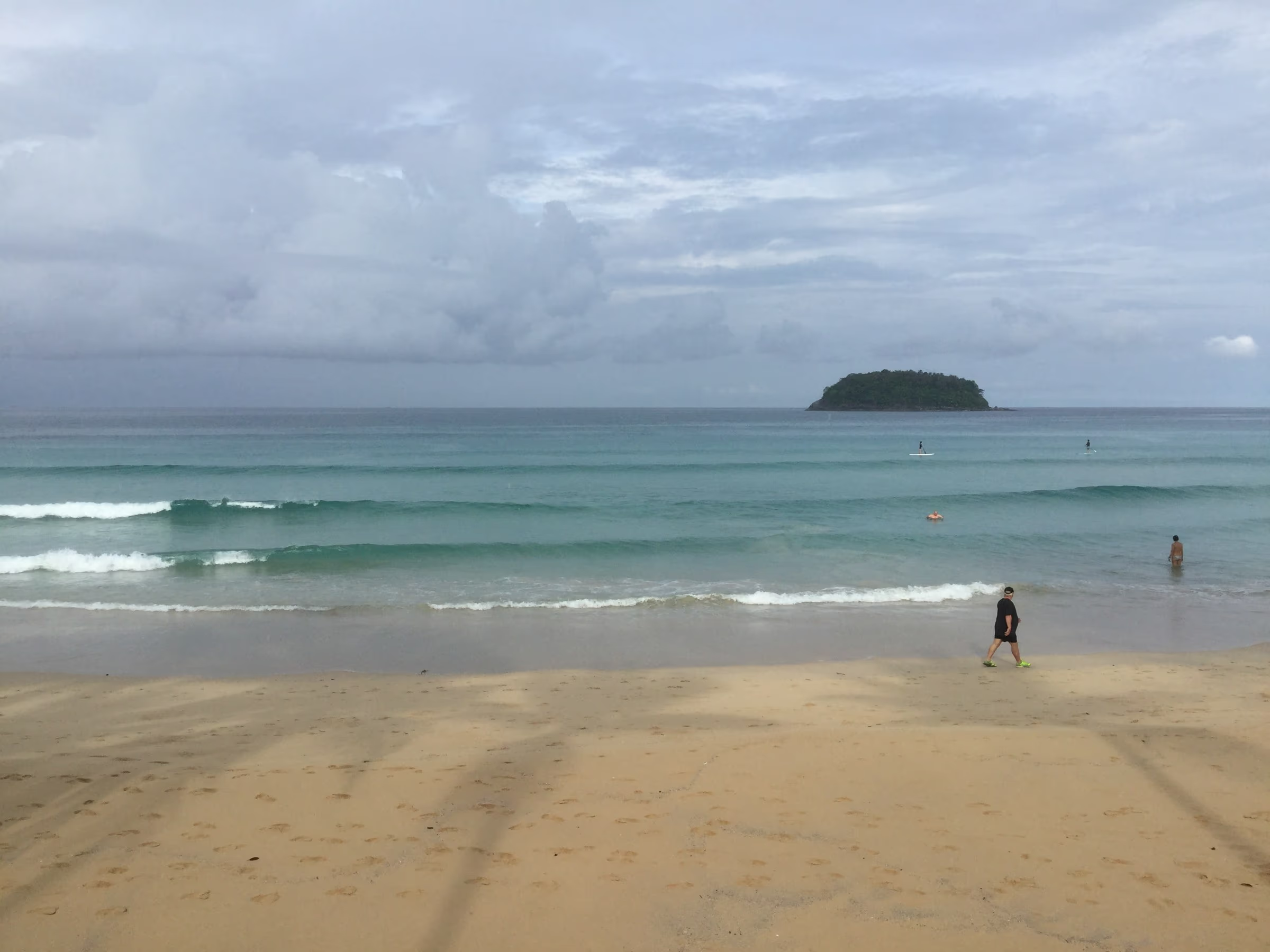
Where Bali loses
On what we checked:
- Purchase tax. Turkey’s 4% is set out in the law, and Dubai’s is 4% plus small fees. On Bali, for a lease, the law is silent on acquisition tax and agent sites contradict each other.
- Ownership. Dubai explicitly allows foreign freehold, and in Turkey you can own a house and land. On Bali you lease.
- Revenue per listing. Dubai ($21,100) is above Bali ($17,700), and Phuket ($17,500) is about level. But AirROI counts all listings, not just villas, and it is revenue, not yield: which pays better against the price cannot be seen from here.
- Residency. Turkey and Dubai both offer citizenship or a Golden Visa for property. If you want status rather than income, Bali is not the best pick.
- Tourist flow. Bali is last of the four: 4.6 million foreigners in eight months against 6.8 million in Phuket (counted differently; Dubai’s figure is for all of 2025).
What is in Bali’s favour. Revenue per listing is second only to Dubai: $17,700 on AirROI. The rupiah lost half of what the lira did over the year (−8% against −16%). In July and August 2026 the tourist flow came back to last year’s level.
A villa in our sample costs $376k (median of 46 listings on 27 Oct 2026; how villa buying works on Bali). The Turkish and Dubai thresholds are the price of residency status; you can also buy cheaper property there.
Who stands in line ahead of you
Purchase tax, annual tax, rental tax and currency all take their share before you get yours. The other four in the line (developer, agent, booking platform and management company) are in the queue for your money.
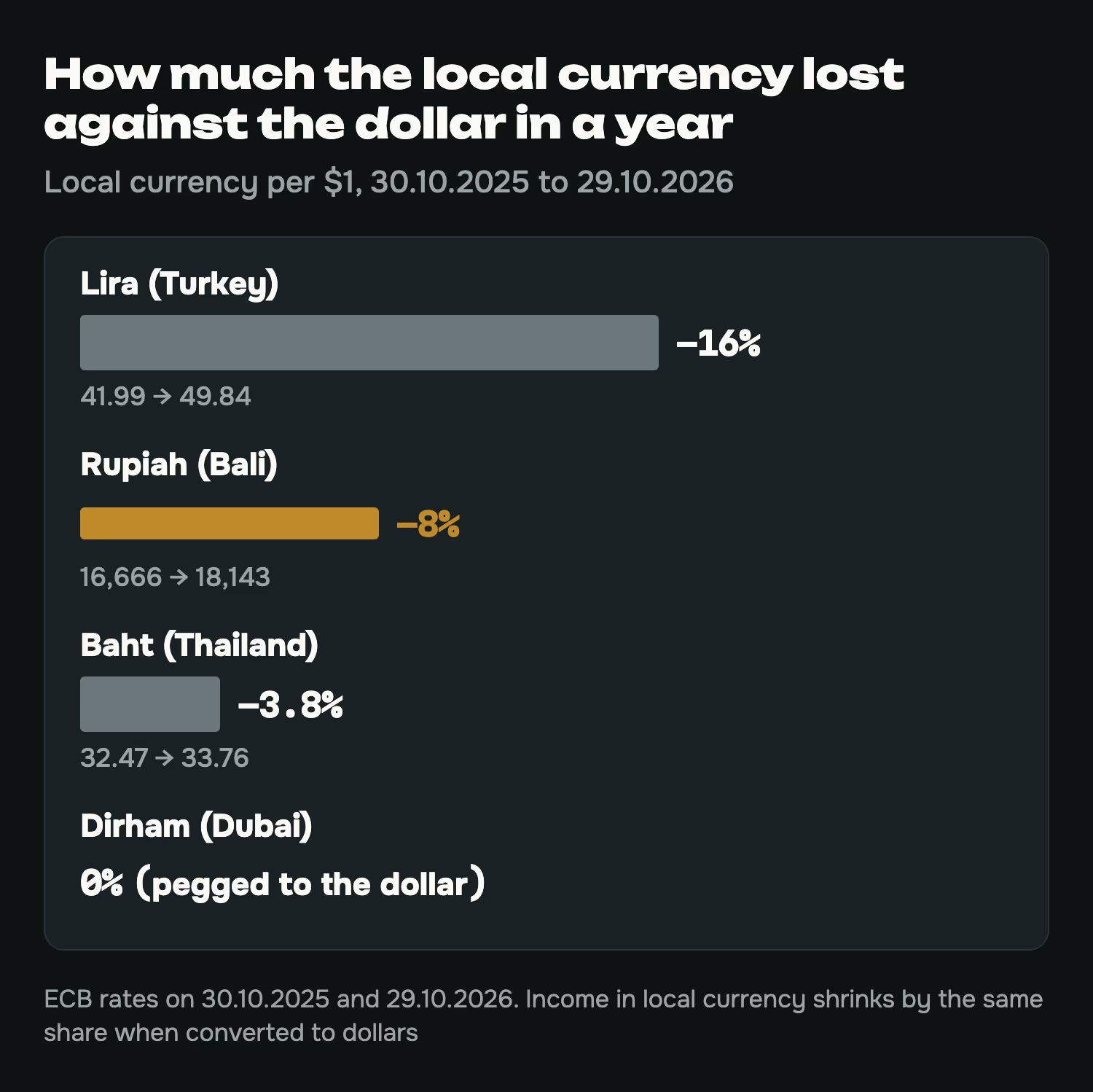
One-year move, ECB rates of 29 Oct 2026:
- lira −16% (41.99 to 49.84 per dollar);
- rupiah −8% (16,666 to 18,143);
- baht −3.8% (32.47 to 33.76);
- dirham unchanged, pegged to the dollar.
If you count income in dollars, a year of currency loss can exceed all the taxes together. In Turkey the lira lost more in a year than the purchase tax and the building tax combined.
In short: which country for which goal
- You want residency. Turkey (citizenship from $400,000, residency from $200,000) or Dubai (Golden Visa from AED 2 million).
- You want a clear purchase tax. Turkey: 4%, set out in the law.
- You want revenue per listing. Dubai, $21,100 on AirROI. That is not yield on price.
- You want a stable rate against the dollar. Dubai.
- You want to own land. Turkey. Dubai, inside the ruler’s zones.
GRC
We are building Nord Nest, a boutique hotel on Bali. You can buy a share of the whole hotel, not a single villa.
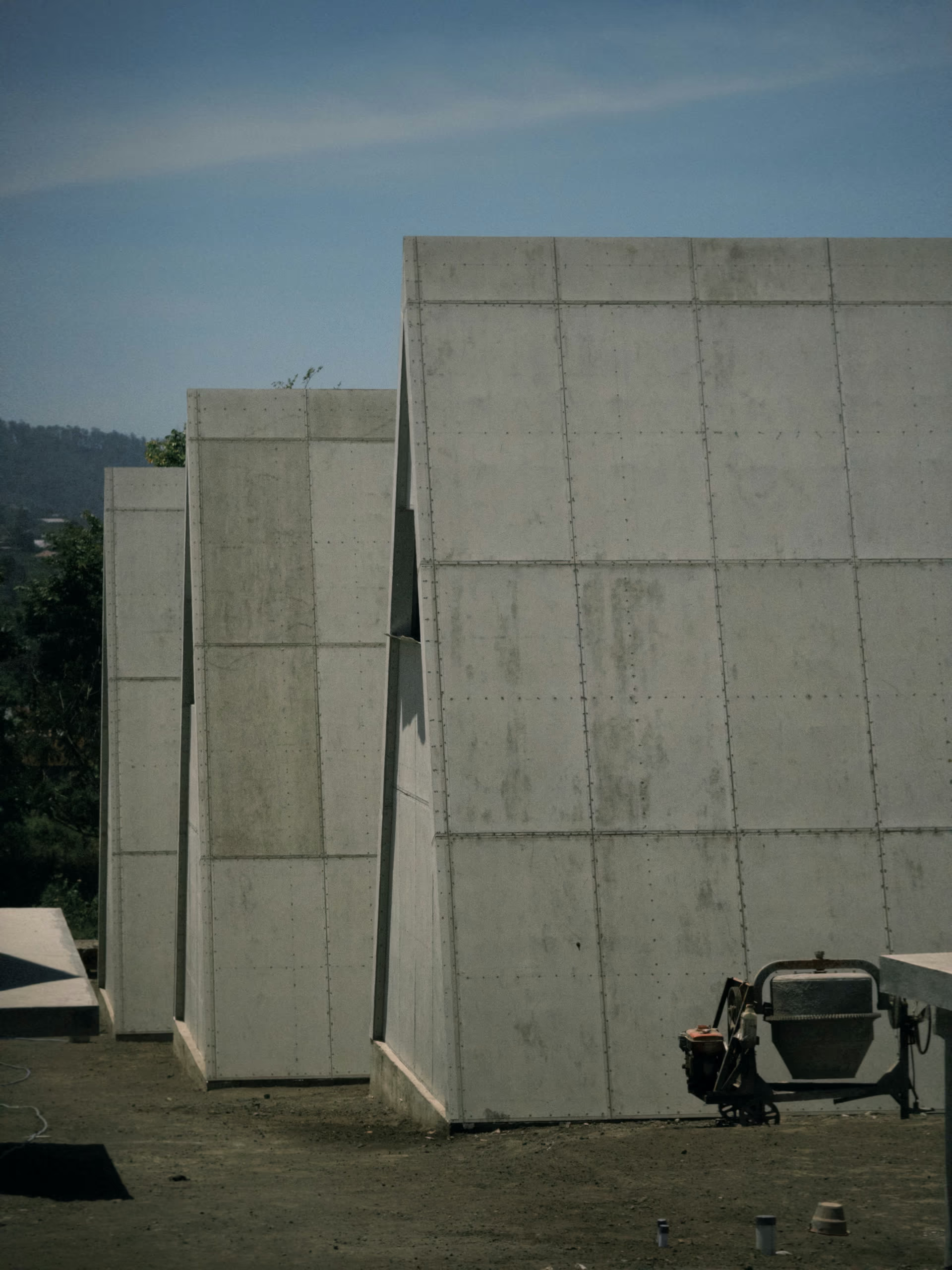
Our model gives 18.7% a year at 80% occupancy and an average rate of $185, assumptions as of August 2026, with a 5.3-year payback by the model. It is a model, and there are no guarantees.
Its 80% cannot be set against AirROI’s 34–41%, which counts every listing including rooms. Closer in kind is AirDNA for Kintamani, August 2026: rate $162, 70% occupancy, $30,608 a year per property (12 properties). The calculation is on the finance page.